

Includes demand forecasting management and material requirements planning, including MRP data preparation, MRP plan generation, MRP order confirmation, purchase order maintenance, and processing order maintenance.
General manager query subsystem
Includesqueries for important matters, enterprise operations, production progress, capital occupancy, personnel information, permission management, data backup and recovery, and system log maintenance.
Functions of a production management system:
I. Integrated management of production resources
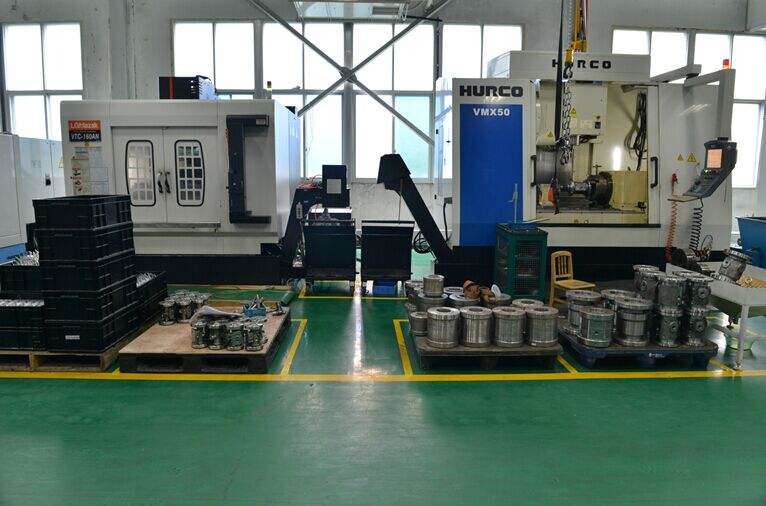
In factory production processes, problems such as wasted parts and excessive accumulation of materials in warehouses are common. These issues can be easily resolved in a production management system. The system can establish a standardized, unified, and complete production database, enabling data interconnection across regions, systems, and processes, real-time control of production dynamics, rapid improvement of collaboration efficiency, and effective prevention of production problems and failures. It can coordinate multiple production modes, multiple production lines, multiple departments, and multiple personnel, while integrating the machines and equipment, work centers, processes, and manufacturing procedures involved in production, preventing idle resources and waste from causing financial pressure on the enterprise.
II. Automatic production scheduling
In production, situations often arise where production schedules exist only in form, bills of materials are unclear, and urgent or inserted orders occur frequently. To avoid these issues, the production management system can automatically match and calculate production plans and bills of materials, generate forecast orders for procurement arrangements, and use production order calculations to automatically estimate time and balance production capacity. It can quickly respond to inserted and urgent orders, automatically arrange the start time, workshop, production line, and completion time of production orders according to scheduling rules, and use automatic dispatching instead of manual scheduling for higher efficiency, fewer errors and omissions, and less workshop management disorder.
III. Production process control
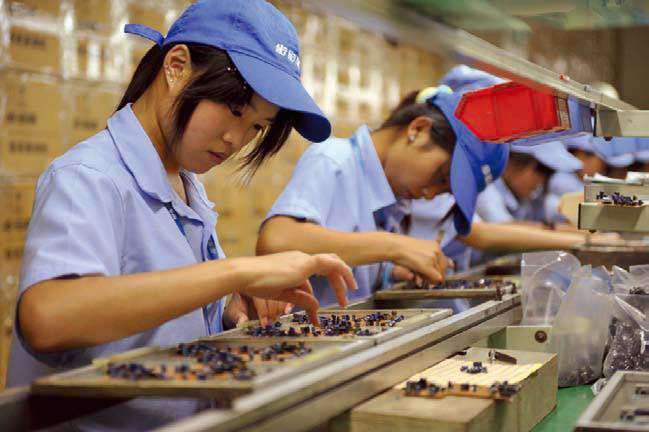
Different management problems often arise at various stages of factory production, making it impossible to complete production on time, delaying delivery dates, and damaging the enterprise's reputation. These costly management problems have long troubled factory production management. However, with a production management system, these issues can be easily solved. For example, the production management system of Zhibang International can help factories realize integrated management throughout the entire process. From BOM, processes, forecasting, planning, orders, workshops, and outsourcing to quality inspection, piece-rate wages, and cost accounting, information is highly shared, processes are automatically linked, and operations are easy to control. It provides simple, intermediate, and complete process modes to fully meet production process needs, supports customized approval workflows, finely controls every stage of the production process, continuously optimizes production line performance, avoids risks in advance, and resolves the various problems caused by factory production processes.
IV. Visible production progress
Factory production managers can view production progress and detailed production conditions in ERP production management software. In the production management system, production progress reports are automatically linked to production data, allowing one-click viewing of the entire execution process of production orders. Detailed information can be seen for every step from task release, dispatching, material picking, supplemental material issuance, material return, rework, and outsourcing to quality inspection. This enables real-time tracking and control of order progress, timely adjustment and arrangement of production activities, and clear progress visibility. Powerful progress query functions keep order number, start date, due date, output progress, working-hour progress, order status, product information, order workflow, piece-rate wages, and payment status fully under control.
V. Production quality control
In actual factory production, if the production process cannot be strictly controlled, unqualified products are very likely to appear during quality inspection. To manage these products properly, the production management system can classify products, provide both in-house production quality inspection and outsourced quality inspection, support custom quality inspection fields, numbers, types, and grades, and support follow-up on inspection orders, warehousing of qualified products, and rework of defective products, thereby reducing the defect rate and saving costs for the enterprise. It can establish a unique identifier for each product, support both sampling inspection and full inspection, support quality inspection for every process and product, strictly control product quality, reduce the risk of returns and claims, help trace the root cause of product problems, and enable timely improvement.
VI. Automatic cost accounting
The production management system can establish scientific and comprehensive cost accounting rules, automatically calculate production-related indirect costs, synchronize the verification of production-related direct costs, and update order-related business data in real time once production order cost accounting is completed. It comprehensively records all kinds of consumption in the order production process, fully coordinates production data, automatically updates order costs, and performs one-click calculation of production costs, ensuring accurate and timely product costs, truly reflecting enterprise profit levels, and effectively improving enterprise performance.
Call Soonfor
Sales: 400-1166-002
After-sales: 0769-22364912 Ext. 200

Back to Top
|
Free Consultation
|
Online Support
|
Submit Request |