

In the workshop of Jiangxi Ganzhou Nankang Urban Development Furniture Industry Intelligent Manufacturing Company, an intelligent revolution about wood is quietly taking place. Along with the roar of machinery, a robotic arm equipped with an AI 3D vision system is busily moving. Like an old craftsman with sharp eyes, it precisely looks at wood materials of different shapes, instantly judges their height and position, then adjusts its angle and steadily grabs and places the materials with smooth movements.
This is equivalent to giving the machine eyes and a brain, Chairman Wang Longping said when describing the applied technological achievement. In the past, traditional robotic arms required repeated manual debugging. Now, relying on AI algorithms, machines can perceive and make decisions independently, greatly improving production efficiency.
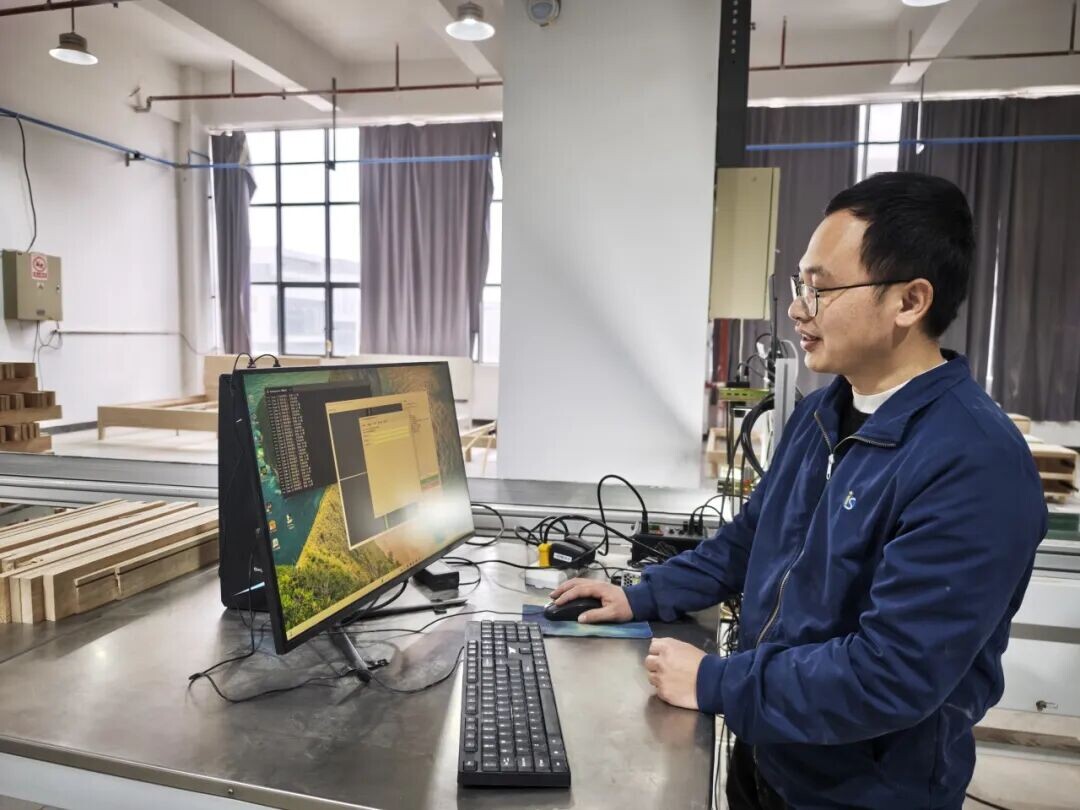
Similar intelligent eyes can not only grab materials, but also identify wood. In solid wood furniture production, how to classify and splice boards according to grain and color was once a pain point that troubled the industry for many years. Relying on the eyesight of veteran craftsmen was inefficient, and errors were hard to avoid. To tackle this tough problem, Nankang Urban Development Furniture Industry Intelligent Manufacturing Company worked with Jiangxi University of Science and Technology and eventually developed an AI wood identification system.
Li Shenyang from the R&D center proudly demonstrated the system's superpower. High-definition industrial cameras scan each piece of wood, and the system instantly identifies it and retrieves database information to display its grain and color. At the beginning, the data volume was small, and AI would also get confused, Li Shenyang recalled with a smile. Later, we continuously fed the system thousands of wood samples with different grains and origins and kept training it. Now its identification accuracy has reached a new height. Since being put into application last November, the system has made solid wood furniture assembly more refined and increased product added value.
The Nankang District Furniture Association has built platforms, organized various activities, and used AI technology to comprehensively empower the local furniture industry.
From manufacturing to intelligent manufacturing, the genes of Nankang furniture are being reshaped by AI.
In the woodworking workshop of Jiangxi Fulong Crown Industrial Co., Ltd., changes are also clearly visible. More than 20 CNC machines are neatly arranged, various parameters flash on screens, and workers only need to tap buttons for the machines to automatically start cutting and carving.
In the past, people directed machines. Now machines wait for people, woodworking supervisor Wen Mingliang told reporters. What the workshop lacks most now is not strong laborers, but new craftsmen who understand CNC, can operate equipment, and can maintain it. Company president Wen Shitong feels this deeply. In his view, the huge industrial ecosystem formed by more than 8,000 furniture enterprises in Nankang is standing at a critical turning point from traditional manufacturing to digital and intelligent transformation. We urgently need talent upgrading, he said. We need senior craftsmen who understand intelligent manufacturing, digital talent who can promote enterprise transformation, and innovators who can integrate AI with home living scenarios.
Breaking through
This thirst for talent has gathered into a strong gravitational wave in Nankang. Walking into the Z-Generation Youth Employment Home in Yuanyang Future Plaza, 24-year-old Nankang local Liu Tao was carefully browsing recruitment information. As a 2024 graduate, he once interned at the Red Cross and now wants to find a clerical job at a furniture enterprise. Nankang's furniture industry is so large, and AI new technology is cutting-edge. I am quite interested, he said. He learned about the recruitment information through Douyin and submitted his resume with expectation.
New talent forces are surging offline and also spreading through the cloud and overseas. In the free entrepreneurship space at Ganzhou International Port, young entrepreneurs are facing computers and selling Nankang furniture to the world on cross-border e-commerce platforms. Han Jinyu, the person in charge, introduced that in just five months, nearly 60 entrepreneurial entities had moved in, more than 60 percent of which are related to the furniture industry. Entrepreneurs use platforms such as TikTok and Alibaba International Station to bring Nankang's designs and products to overseas markets.
Behind the data is the systematic transformation of Nankang's furniture industrial chain. Shen Qi, head of operations for the Jiangxi Modern Furniture Industry Brain project, introduced: We are installing an intelligent brain for the entire industry with a 1. plus 10 plus N architecture. This brain covers every aspect from innovative design and timber trading to industry-finance services and logistics distribution. It has now connected more than 7,200 enterprises across the industrial chain, allowing data to flow freely along the chain and precisely match resources for enterprises, reducing costs and improving efficiency.
As a bridge between government and enterprises, the Nankang District Furniture Association is also actively embracing the AI wave. Secretary-General Yang Jian said that the association's self-media IPs such as Six Little Dragons and Seven Fairies exceeded 10 billion views across the internet in 2025. We are leading enterprises to go overseas together and also using AI for design and sales to comprehensively empower enterprises, he said.
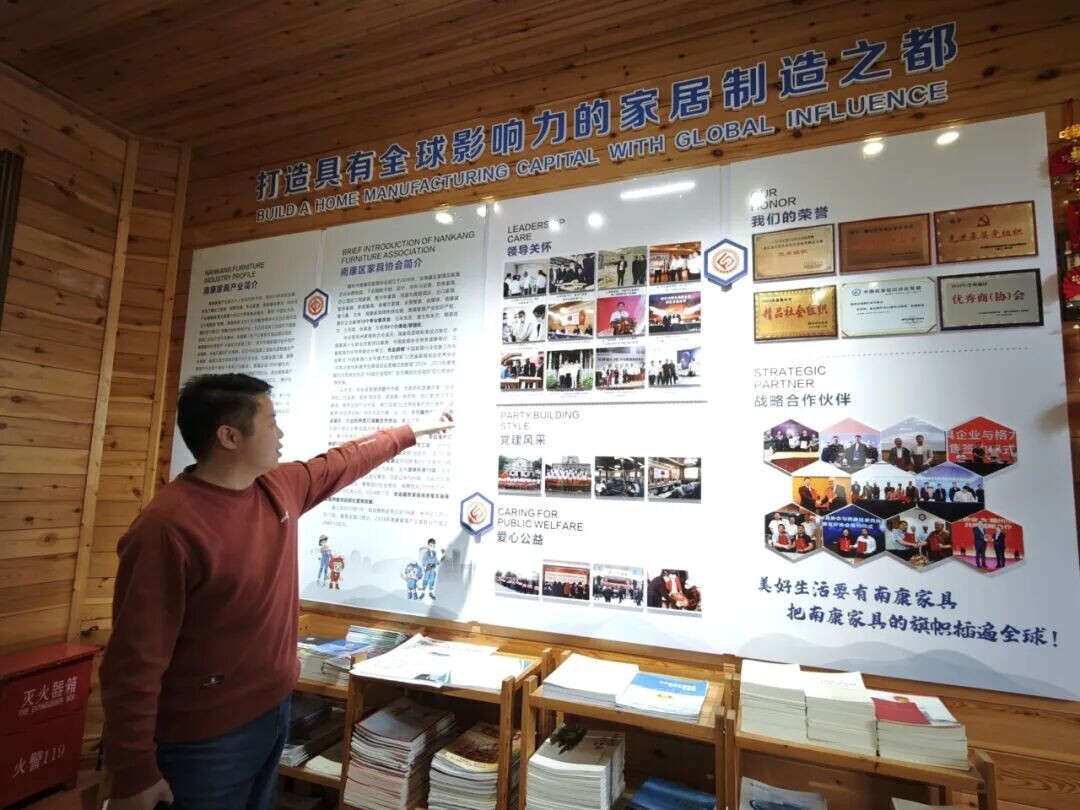
Zhang Qiwu, director of the Nankang District Human Resources and Social Security Bureau, is closely watching the impact of technological change on the job market. He told reporters that under the new situation of industrial digital transformation, talent demand in intelligent manufacturing and artificial intelligence already accounts for 30 percent of total industrial labor demand. This is both a challenge and an opportunity, he said. On one hand, the proportion of AI and digital economy content in vocational skills training has been increased. On the other hand, talent enclaves are being laid out in furniture industrial belts nationwide to precisely introduce intelligent and digital talent, allowing Nankang furniture to continue leading in the AI era.
Many furniture enterprises need new craftsmen who understand CNC, can operate equipment, and can maintain it.
From the plane and craftsmanship of Hakka people in the 1990s to today's AI-empowered digital brain, the Nankang furniture industry is undergoing a profound generational inheritance. On this vibrant land, the integration of tradition and modernity is nurturing a new spring for the furniture industry capital of central China.
Source: China Labor and Social Security News
Back to List >>Call Soonfor
Sales: 400-1166-002
After-sales: 0769-22364912 Ext. 200

Back to Top
|
Free Consultation
|
Online Support
|
Submit Request |