

In recent years, Vietnam's exports of timber and wood products have continued to maintain relatively rapid growth and have become one of the country's important export pillar industries. Against the backdrop of intensifying global market competition and increasingly strict green trade standards, Vietnam's timber industry is striving to enhance product added value and international competitiveness through technological upgrading, green transformation, and design innovation.
According to Vu Ba Phu, Director of the Trade Promotion Agency under Vietnam's Ministry of Industry and Trade, Vietnam's exports of timber and wood products reached about USD 17.2. billion in 2025. Among this, exports of wooden furniture and related products from Ho Chi Minh City alone exceeded USD 9. billion. At present, Vietnam's wooden furniture and wood products have been exported to more than 160 countries and regions worldwide, and the US market accounts for more than half of the total exports of the whole industry.
However, Vietnam's timber industry also faces many challenges. Major markets such as the European Union and the United States have put forward stricter standards for product quality, raw material traceability, and sustainability. At the same time, the global trend of green trade requires enterprises to accelerate their transition toward green production and emissions reduction. In addition, changes in US tariff policy, rising geopolitical risks, and increased logistics costs also put pressure on the industry's competitiveness.
Su Ngoc Y, Vice Chairman of the Ho Chi Minh City Handicraft and Wood Industry Association, said these challenges are forcing the industry to continuously improve its market forecasting and risk management capabilities and strengthen its ability to respond. Local wood-processing enterprises are actively promoting innovation in production and business models, continuously enhancing competitiveness by introducing advanced equipment and technology, strengthening management of legal timber supply chains, promoting digital transformation, and implementing energy-saving and environmentally friendly production measures.
Su Dang Trung, Chief Executive Officer of Vietnam Cung Cung Co., Ltd., said that the US market has strong demand for Vietnamese wooden furniture, but also places extremely high requirements on product quality. He said that enterprises have mastered the relevant core technologies over the years and made capacity preparations in advance, while also expanding production capacity by establishing supporting factories. He believes that Vietnamese enterprises are no less competitive than other countries in creativity and design, and that more Made in Vietnam wooden furniture products will emerge in the future.
While promoting technological upgrading and green transformation, cost reduction has also become an important path for enhancing competitiveness.
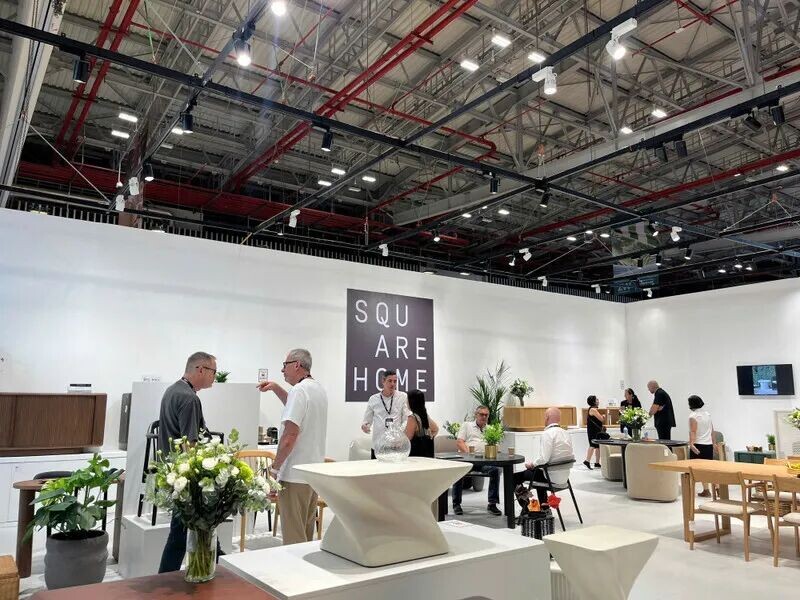
Feng Guoqiang, Production Director of Baoxing Company, said that by introducing a new green packaging solution, the company made product packaging more compact, which not only reduced damage caused by collisions during transportation, but also lowered packaging costs by 20% to 30%, thereby strengthening its competitive advantage in the US market.
Nguyen Van Chuong, General Manager of Vietnam Commodity Import Export Joint Stock Company, believes that to enhance export value and market competitiveness, enterprises also need to pay more attention to product design and strictly comply with ESG standards related to environment, society, and governance.
Su Ngoc Y said that in order to move away from the pure OEM and order-based production model and increase added value, enterprises must increase investment in product design and research and development. Experts point out that Vietnam's timber industry has a skilled labor force capable of producing highly personalized products, and personalization is an important consumption trend in the international market today. Relying on skilled labor, modern design, and standards-compliant raw materials, Vietnam's timber industry is fully capable of producing products with higher added value and stronger international competitiveness.
Nguyen Quoc Tri, Deputy Minister of Vietnam's Ministry of Agriculture and Environment, said that the government will provide a stable and legal source of timber for industry development through measures such as improving systems and policy environments, developing domestic raw material forest bases, and promoting sustainable forest certification. At the same time, the government will also support enterprises in improving their ability to respond to international trade defense measures and strengthening compliance with technical standards and environmental requirements.
Nguyen Van Duoc, Chairman of the Ho Chi Minh City People's Committee, suggested that the Ho Chi Minh City Handicraft and Wood Industry Association and industry enterprises should work with the government to advance five strategic goals. First, they should take the lead in promoting green transformation to meet the strict requirements of the European Union and the United States regarding raw material traceability and prevention of deforestation, and within the next few years 80% of the city's wood products should meet green standards and be traceable. Second, they should promote the industry's transformation from Made in Vietnam to Created by Vietnam, shifting from pure OEM to self-owned design, technology, and branding. Third, they should give full play to the coordinating role of industry associations, improve enterprises' application of digital technology to enhance supply chain transparency, reduce the risk of international trade friction, and promote deeper integration of products into the global supply chain. Fourth, they should promote market diversification, consolidating traditional markets while actively exploring potential markets such as the Middle East, South Asia, and Latin America. Fifth, enterprises should proactively set development goals and contribute to achieving double-digit economic growth for Ho Chi Minh City in 2026.
Source: Vietstock Express
Call Soonfor
Sales: 400-1166-002
After-sales: 0769-22364912 Ext. 200

Back to Top
|
Free Consultation
|
Online Support
|
Submit Request |