

More factories, yet data remains fragmented?
Higher capacity, yet delivery keeps getting delayed?
Larger scale, yet instructions get distorted layer by layer?
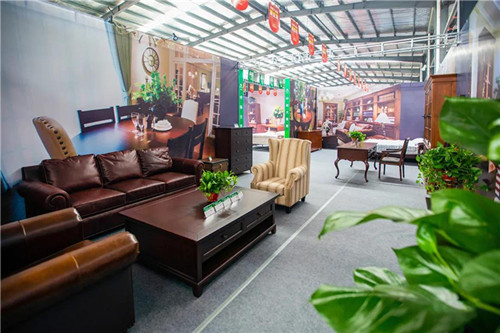
In the pan-home furnishing industry, as enterprises expand, operating multiple production bases has become the norm. Some companies set up plants nationwide to get closer to markets, some focus on different product categories, and some balance domestic sales with exports. However, while multiple factories bring capacity advantages, they also often create a series of management problems: order allocation relies on manual coordination, inventory information is isolated by factory, production standards are inconsistent, and cost accounting is vague. The result is internal resource friction, delayed delivery, and profits being quietly eroded.
The root cause of the problem lies in the lack of a digital nervous system that connects the whole picture.
Just as the human body needs key meridians to be open for smooth circulation, home furnishing groups also need to use digitalization to connect the full chain of planning, procurement, production, warehousing, and finance, achieving a leap from decentralized management to centralized collaboration.
True multi-factory collaboration is not simply copying the ERP system into every factory, but building a digital architecture with one unified platform, multi-level control, and flexible configuration.
Unified master data means one code runs through materials, BOMs, and process routes, avoiding different names for the same item.
Intelligent order allocation automatically recommends the optimal production base according to each factory's capacity, delivery date, and logistics cost.
Cross-factory inventory visibility means that if Factory A lacks material and Factory B has a surplus, the system gives real-time warnings and transfer suggestions.
Centralized planning plus local execution means headquarters uses APS for unified scheduling, while each factory executes through MES and feeds progress back in real time.
Consolidated reporting and cost drill-down make every cost clear and traceable from group level to workshop level.
Once this system is up and running, multiple factories are no longer a burden, but become the core competitive strength that allows enterprises to respond quickly to the market, deliver flexibly, and reduce costs while improving efficiency.

As a digital partner deeply engaged in the pan-home furnishing industry for more than 20 years, Soonfor Software has provided multi-factory collaboration solutions for many group-based home furnishing enterprises, covering integrated digital solutions such as ERP, APS, MES, WMS, and SCM, while deeply integrating management consulting and implementation services. It truly helps home furnishing groups open up every key link and turn multi-factory collaboration from an ideal into reality.
Back to List >>Call Soonfor
Sales: 137-1208-6729
After-sales: 400-1166-002

Back to Top
|
Free Consultation
|
Online Support
|
Submit Request |