

As whole-home customization surges, how should the supply chain behind it be restructured? In recent years, whole-home customization has been rapidly reshaping the home furnishing industry landscape. From single-category cabinet customization to one-stop solutions covering kitchens, wardrobes, wooden doors, wall panels, soft furnishings, and even home appliances, consumer demand for integrated whole-home design plus delivery continues to heat up. Leading brands such as Oppein, Sophia, and Shangpin Home Collection have all launched whole-home strategies, while small and medium-sized brands are speeding up to follow.
However, the boom in whole-home customization is not just an upgrade of marketing concepts, but a profound restructuring of the traditional supply chain system. If supply chain capabilities cannot keep up, whole-home customization can easily fall into the dilemma of taking orders easily but delivering them with difficulty, leading to delayed lead times, installation errors and omissions, cost overruns, and surging customer complaints.
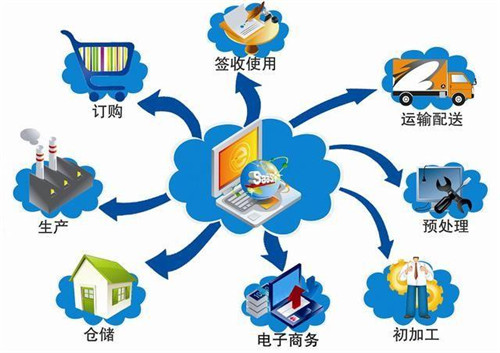
So what new challenges does whole-home customization pose to the supply chain, and how should enterprises systematically rebuild their supply chain capabilities?
I. Three major supply chain challenges brought by whole-home customization
1. Explosive SKU growth and soaring management complexity
Whole-home customization expands the number of categories from dozens to thousands: panels in different materials, hardware, lighting, curtains, sofas, and more. Each category also involves multiple suppliers, specifications, and delivery standards. The traditional supply chain model centered on single-product management can hardly cope with such high-dimensional material coordination.
2. Intensified conflict between non-standardization and standardization
Whole-home customization emphasizes personalization, while the production side pursues economies of scale and efficiency. How to extract reusable modules, such as standard cabinet bodies and common connectors, from design solutions tailored to every individual, and thereby achieve flexible standardization, has become the key to supply chain design.
3. A steep increase in the difficulty of multi-category collaborative delivery
In the past, delivering a wardrobe required coordinating only one or two installers. Today, a whole-home solution may involve five to eight categories, three to four suppliers, and multiple construction phases. Without unified scheduling, on-site conflicts can easily arise, such as the flooring being laid while the cabinets have not arrived, or the lighting being installed only to find the ceiling openings are incorrect.
II. Four core directions for supply chain restructuring
1. Build a platform-based product architecture
Break down whole-home products into a three-layer structure of base modules, optional components, and personalized finishes;
Establish universal BOM templates and process rule libraries to ensure that any combination can be manufactured;
Promote in-house production of core components such as cabinet bodies and frames, while sourcing non-core items such as lighting and textiles through strategic centralized procurement.
Result: while meeting personalization needs, enterprises can increase component commonality and reduce inventory and changeover costs.
2. Build an intelligent single-inventory supply chain
Connect data from stores, central warehouses, regional warehouses, factories, and third-party logistics;
Dynamically plan the arrival rhythm of each category based on order completeness and installation time windows;
Introduce intelligent completeness inspection mechanisms to warn of material shortages before orders are confirmed.
Result: avoid partial deliveries and repeated site visits, and achieve one-time delivery and one-time installation.
3. Promote deep supplier collaboration
Establish VMI, or vendor-managed inventory, or JIT direct-to-site delivery models with core suppliers;
Share master data such as product codes and quality inspection standards, as well as order plans and delivery milestones;
Implement unified admission, unified evaluation, and unified settlement for multi-category suppliers.
Result: incorporate external resources into the internal supply chain system and improve response speed and consistency.
4. Use digital systems to drive end-to-end visibility
From the moment a customer places an order, the system automatically breaks it down into tasks for each category and assigns them to the corresponding responsible parties;
Track the status of every material item in real time, whether in stock, in transit, or installed;
Management can view the health of end-to-end fulfillment for each complete order through a cockpit and intervene in abnormalities in advance.
Result: make the invisible supply chain transparent and controllable.
III. The key to implementation: shifting from chain-based to networked thinking
Traditional supply chains are linear: design to procurement to production to logistics to installation.
Whole-home customization, by contrast, requires networked collaboration: multiple categories advancing in parallel, information interacting in real time, and resources being dynamically allocated.
This requires not only process optimization, but also a digital foundation capable of supporting complex business logic. It must simultaneously understand design language, manufacturing logic, logistics rules, and customer service standards.
Soonfor Software helps whole-home customization supply chains land efficiently
Faced with the supply chain complexity brought by whole-home customization, enterprises urgently need a partner that understands home furnishing operations and also has strong system integration capabilities. Soonfor Software has been deeply engaged in the home furnishing industry for more than 20 years and has provided integrated digital supply chain solutions for many leading and growth-oriented whole-home customization enterprises, including Mengtian Woodwork, TUCSON, Muli Muwai, ZBOM Home, Boloni, Moganshan, Runcheng Chuangzhan, Chongqing Mexin, and Lamis Customization:
Supports automatic multi-category BOM decomposition and completeness analysis;
Enables full-chain connectivity across ERP, MES, WMS, and TMS;
Built-in master data standards for the home furnishing industry ensure consistency across category collaboration;
Provides closed-loop management from order coordination and intelligent scheduling to delivery tracking.
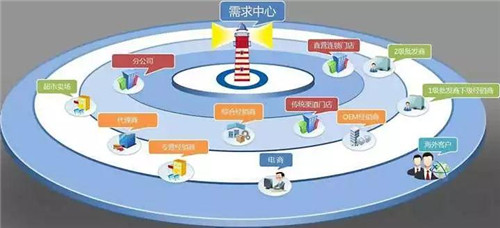
Today, as whole-home customization moves from being a market hotspot to becoming the norm, the supply chain is no longer just backstage support, but a core competitive capability. Only by restructuring the supply chain can a beautiful whole-home vision move beyond renderings and enter homes efficiently and accurately.
Back to List >>Call Soonfor
Sales: 137-1208-6729
After-sales: 400-1166-002

Back to Top
|
Free Consultation
|
Online Support
|
Submit Request |