

In today's manufacturing environment of multiple varieties, small batches, and short delivery cycles, urgent inserted orders, material shortages, and sudden equipment failures have become daily nightmares for production planners. Traditional methods that rely on Excel or rough ERP scheduling often require hours or even days of manual rescheduling when facing these three major exceptions. This is not only inefficient, but also more likely to cause delivery delays, resource waste, and customer loss.
APS, or Advanced Planning and Scheduling, is becoming a core tool for solving this dilemma. It is not only a production scheduling tool, but also the enterprise's intelligent production brain, capable of completing global optimization within seconds and enabling change without chaos.
This article provides an in-depth analysis of how APS systematically handles three typical scenarios: inserted orders, material shortages, and equipment failures, while revealing the intelligent scheduling logic behind it.

I. Urgent inserted orders: from disrupting the whole plan to precise insertion
Traditional pain points:
After an inserted order arrives, the production line must be paused and all orders must be manually recalculated.
The impact on the original plan cannot be evaluated, often causing delays to key orders.
Priorities become confused, and high-value customers may instead be sacrificed.
APS intelligent response strategy:
Rapid identification of the affected scope
The system automatically analyzes the process route and required resources of the new order, accurately identifies the affected equipment, processes, and related orders, and avoids full-scale rescheduling.
Multi-scenario simulation and evaluation
Based on what-if analysis, APS can generate multiple inserted-order plans, such as adjusting priorities, splitting tasks, or enabling backup capacity, and quantify the impact of each plan on delivery time, cost, and equipment load.
Minimum-disruption rescheduling
Using a baseline plan plus incremental correction algorithm, APS re-optimizes only the affected subnet, preserving the stability of the original plan as much as possible and reducing confusion at the execution level.
Case example: an auto parts factory received an urgent order requiring delivery in 3. days. The APS system instantly completed a resource health check by checking inventory, simulating capacity, evaluating outsourcing needs, and providing a capable-to-promise delivery date, thus avoiding blind order acceptance.
II. Material shortages: from waiting for materials to dynamic sequence adjustment
Traditional pain points:
Material shortage information lags behind, and missing materials are discovered only after the production line has already started.
Manual judgment is needed to decide which orders can be produced first, with little data support.
Emergency procurement is costly and disrupts the overall rhythm.
APS intelligent response strategy:
Real-time BOM-driven kit completeness checks
When an order is imported, APS automatically analyzes the product BOM and combines real-time inventory with in-transit procurement data to predict material kit completion time. If key materials are insufficient, the system immediately freezes scheduling or triggers a procurement warning.
Intelligent sequencing and substitution strategies
Prioritize production of orders with complete material kits to maximize equipment utilization.
Support substitute material rules and automatically activate alternatives when main materials are out of stock.
Simulate delays for material-short orders and evaluate whether production stoppage can be avoided by adjusting delivery dates.
Closed-loop linkage with WMS and MES
Through API integration with the warehousing system, APS obtains real-time material arrival status. Once the shortage is resolved, APS automatically inserts the order into the optimal time window without manual intervention.
Result: when one electronics factory faced a chip shortage, APS automatically adjusted the production sequence, prioritized models with sufficient inventory, and triggered the replenishment process, avoiding stagnation of the entire production line.
III. Equipment failures: from passive firefighting to proactive reconstruction
Traditional pain points:
After a failure occurs, notifications rely on phone calls, resulting in slow response.
Manual task reassignment easily creates new conflicts.
The overall impact on delivery cannot be evaluated.
APS intelligent response strategy:
Real-time monitoring and automatic alerts
Through IoT or MES interfaces, APS collects equipment status in real time. Once downtime exceeds the threshold, the system automatically triggers the rescheduling process.
Resource substitution and task migration
The system immediately identifies available substitute equipment, such as similar CNC machines or edge banding machines.
Unfinished tasks are split and migrated to other production lines to ensure continuous production.
Subsequent process schedules are automatically adjusted to prevent cascading delays.
Predictive maintenance support
Some advanced APS systems can predict potential failures based on historical equipment maintenance data and arrange maintenance or adjust plans in advance, preventing problems before they happen.
Practice example: after a mold failure caused a 2-hour shutdown at an injection molding factory, APS completed full-factory rescheduling within 5. minutes and transferred the affected products to a backup production line, achieving zero delay in overall delivery.
IV. Why can APS achieve second-level response? Core technologies revealed
Multi-objective optimization algorithms: integrating genetic algorithms, simulated annealing, constraint programming, and other methods to balance KPIs such as delivery time, cost, and equipment utilization.
Rolling window mechanism: refined scheduling for the near term and rough estimation for the long term, improving calculation efficiency.
Digital twin simulation: rehearsing the impact of exceptions in a virtual environment to reduce disruption to the real system.
Visual Gantt chart: intuitively displaying comparisons before and after adjustment to support manual decision-making.
When facing inserted orders, material shortages, and equipment failures, truly intelligent scheduling is not about never being interrupted, but about quickly finding the optimal solution amid change. Through data driving, algorithm optimization, and system integration, APS upgrades production planning from static drawings to dynamic navigation, allowing enterprises to control certainty amid uncertainty.
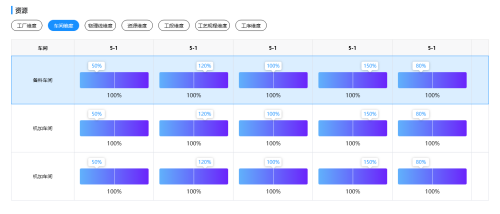
Implementing all of this depends on a professional, industry-adapted APS platform. Soonfor Software has been deeply engaged in the home furnishing manufacturing field for many years. Its APS advanced scheduling system deeply integrates production logic for multiple categories such as panel furniture, solid wood, and upholstered furniture, supports coordinated scheduling across multiple factories and workshops, and has helped thousands of enterprises including Treton Group, Mengtian Home, and Taizi Home improve scheduling efficiency by more than 30% and raise on-time delivery rates above 95%.
Back to List >>Call Soonfor
Sales: 137-1208-6729
After-sales: 400-1166-002

Back to Top
|
Free Consultation
|
Online Support
|
Submit Request |