

"The rendering looks as beautiful as a magazine, but the delivered site is a disaster." This has become one of the most common pain points in the home decoration and customized manufacturing industries. The sample room may have soft lighting, smooth circulation, and premium materials, but when it comes to actual construction or mass production, problems often appear: misplaced dimensions, downgraded materials, reduced workmanship, and missing functions. The root cause is often not the design itself, but the lack of a consistency assurance mechanism between design and production.
Design-production consistency means that throughout the full chain from concept drawings and detailed design plans to factory processing and on-site installation, product form, material specifications, process standards, and cost structures remain highly unified, eliminating the disconnect between plans on paper and distorted execution on the ground. So how should enterprises build this assurance system?
I. Unified data source: use one model throughout the full lifecycle
Delivery failures often come from information gaps. Designers model in SketchUp, order breakdown staff calculate materials in Excel, and workshops cut materials based on handwritten drawings. Different parties understand things differently, and errors are amplified layer by layer. The solution is to establish a single source of truth. Through BIM or parametric design platforms, product structures, bill of materials (BOM), process routes, and assembly logic are all structurally entered into the system. Any design change is automatically synchronized to order breakdown, procurement, and production, ensuring that when one part changes, the entire chain updates, eliminating information deviation from the source.
II. Standardization + modularization: let creativity grow within a controllable framework
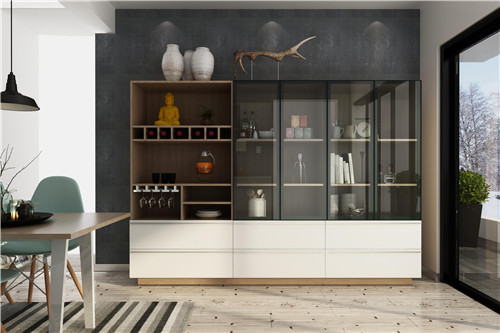
Excessive pursuit of unique design often leads to too many non-standard parts, complex processes, and high rework rates. Truly efficient consistency management means expressing personalization on a standardized foundation. For example, cabinets can use standard depths of 550 mm or 600 mm and standard shelf spacing, while options are provided only for door panel styles, colors, and hardware combinations. This satisfies customers' aesthetic needs while ensuring that factories can prefabricate in batches and assemble quickly on site, greatly reducing error rates and cost fluctuations.
III. Closed-loop verification mechanism: from virtual simulation to first-piece confirmation
Even the most perfect drawings need real-world verification. Leading enterprises generally implement dual-track verification through digital twins and physical sampling:
Conduct interference checks in the system, such as conflicts between pipelines and frames, opening and closing simulations, such as whether cabinet doors hit walls, and lighting analysis to avoid blind spots.
Produce 1:1. physical samples at key nodes, jointly accepted by design, production, and customer teams. Only after materials, closing details, and functions are confirmed can mass production begin.
This process forms a closed loop of design, simulation, sampling, feedback, and optimization, eliminating problems before mass production.
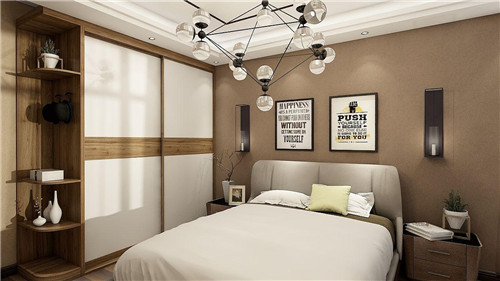
The mission of a sample room is not to create an illusion, but to serve as the starting point for real delivery. Only when design language can be accurately translated and executed by the production system can stunning effects move from showrooms into thousands of households.
To achieve this seamless connection, a strong digital foundation is essential. Soonfor Software has been deeply involved in the home furnishing and customized manufacturing fields for more than 20 years. Its integrated solution connects design (CAD), order breakdown (CAM), production (MES), and supply chain (ERP). With parameter driving, rule constraints, and process closed loops at its core, it ensures high consistency from a rendering to a finished product. It has helped many brands achieve what you see is what you get and improve delivery satisfaction by more than 40%.
Back to List >>Call Soonfor
Sales: 137-1208-6729
After-sales: 400-1166-002

Back to Top
|
Free Consultation
|
Online Support
|
Submit Request |