

In the wave of digital transformation in home furnishing manufacturing, one term frequently appears in discussions among industry experts: APS, the Advanced Planning and Scheduling system. So what exactly is APS?
APS, short for Advanced Planning and Scheduling, is the core industrial software used to solve production scheduling and dispatching problems. Often referred to as a sequencing or resource allocation problem, it formulates the optimal production plan by synchronously and in real time simulating all resources under constraints.
In plain terms, if ERP is the brain of enterprise resource management, then APS is the heart of production execution. It determines when, with which equipment, by whom, for which order and in what quantity production is carried out.
For the home furnishing industry, the core value of an APS system lies in quickly generating the optimal production schedule through complex intelligent algorithms while considering constraints such as equipment capability, material limits, process requirements and worker skills.
II. Why do home furnishing enterprises urgently need APS? Three fatal weaknesses of traditional scheduling
As the customization wave sweeps the home furnishing industry, enterprises commonly face scheduling problems such as fragmented orders, compressed delivery times and complex processes. Traditional methods relying on Excel or basic ERP scheduling can no longer cope with the production reality of many varieties, small batches and urgent inserted orders.
1. Static scheduling cannot respond dynamically
Once a traditional Excel production schedule is made, it is difficult to adjust. Temporary delivery-date changes, sudden equipment failures and delayed material arrivals all require manual rescheduling, taking 2. to 3. hours and easily causing errors.
2. Resource constraints are ignored and plans are infeasible
ERP rough scheduling only considers total capacity while ignoring micro constraints such as equipment capability, mold matching and worker skills, creating the awkward situation of feasible on paper but difficult on site.
3. Lack of optimization goals leads to low efficiency
Manual scheduling often simply arranges orders by sequence, without considering board utilization, process connection or load balancing of bottleneck equipment, causing extensive waiting and changeover waste.
III. How does APS become the key to faster delivery? Four core mechanisms revealed
Core mechanism 1: multi-constraint modeling makes plans executable
When a new order enters the system, APS automatically checks whether required boards are complete, whether CNC capacity is available and whether the paint room is saturated, generating only physically feasible scheduling plans.
Core mechanism 2: intelligent optimization algorithms pursue global optimum
APS uses intelligent algorithms such as genetic algorithms, simulated annealing and heuristic rules to automatically optimize production objectives while satisfying all constraints:
Minimize total completion time
Maximize utilization of key equipment, such as CNC equipment
Minimize mold changes and color changes
Prioritize high-value or urgent orders
A panel furniture factory used APS to schedule orders with similar colors together, reducing line changeover time by 40%.
Core mechanism 3: dynamic rescheduling responds to changes within minutes
When inserted orders, equipment downtime or material shortages occur, APS can automatically reschedule the entire factory plan within 5. to 10 minutes and evaluate the impact of different adjustment options to minimize overall efficiency loss. Compared with the traditional method that requires 2. hours of manual rescheduling, APS improves response speed by more than 12 times.
Core mechanism 4: system integration forms closed-loop feedback
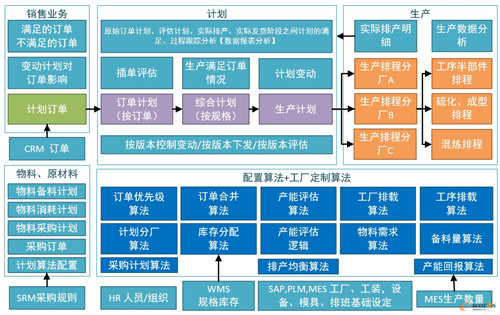
APS is not an isolated system. It is deeply integrated with ERP for orders and BOM, MES for actual progress feedback, and WMS for inventory monitoring, forming a complete closed loop of plan, execution, feedback and optimization.
After scan-based work reporting on the production site, APS updates progress in real time. If a process delay exceeds the threshold, it automatically triggers an alert and adjusts subsequent tasks to avoid cascading delays.
IV. Full analysis of APS scheduling logic in the home furnishing industry, with typical cases
Taking panel custom furniture as an example, typical APS scheduling logic is as follows:
Order pool screening -> sort by delivery date, customer level and profit
Material kitting check -> board and hardware inventory plus purchased materials in transit
Process route matching -> standard cabinet vs. special-shaped countertop
Intelligent batch grouping -> merge orders with the same material, color and thickness
Cutting optimization layout -> integrate nesting algorithms to maximize board utilization
Process-level scheduling ->
CNC cutting (considering tool changes)
Edge banding (grouped by color to reduce cleaning)
Drilling (six-sided drilling prioritized)
Packaging (packed by delivery area)
Bottleneck resource focus -> if the spraying line is the bottleneck, give priority to ensuring its continuous operation
Output Gantt chart + work orders + material requirement list
Typical case: after an enterprise applied APS, daily cutting orders increased from 80 to 120, and board utilization rose from 82% to 91%.
V. Practical results of APS implementation: data speaks
Result 1: scheduling efficiency improves by more than 30%
According to industry practice data, after scientific APS deployment, scheduling efficiency improves by an average of more than 30%, equipment utilization increases by 15% to 25%, and on-time order delivery rises to more than 95%.
Result 2: production cycle is greatly shortened
Through digital-intelligent transformation, XX Company's product production cycle was shortened from 6. days to as little as 3. days. From order entry to finished-product outbound, the whole process is data-driven with connected equipment and efficient process collaboration, greatly compressing the production cycle.
Result 3: labor costs are significantly reduced
In XX smart factory, a production area of more than 10,000 square meters requires only 15 workers to complete the full production process. For the same number of orders, a traditional production line would require more than 160 workers and 3. days, while the intelligent line needs only 15 people and 6. hours.
Result 4: defect rate drops sharply
Compared with six years ago, XX's defect rate dropped sharply from 4.38% to 1.56%, a decrease of 63.9%; its on-time product delivery rate rose from 86.44% to 99.17%.
VI. Soonfor APS: an intelligent scheduling expert built for the home furnishing industry
In the application of APS in the home furnishing industry, Soonfor Software has become a common choice for many leading enterprises thanks to more than 20 years of deep industry cultivation.
Deep adaptation to home furnishing industry characteristics
The Soonfor APS Advanced Scheduling Management System is built for the home furnishing industry. It deeply integrates production logic for multiple categories such as panel furniture, solid wood and upholstered furniture, and supports collaborative scheduling across multiple factories, workshops and brands. It allows you to optimize resource utilization and identify production bottlenecks in advance while considering delivery performance and inventory levels.
Efficient and practical scheduling operations
Soonfor APS can easily perform common scheduling operations such as moving orders, inserting orders, splitting orders and merging orders. It also provides production order change processing so that scheduled production order plans stay synchronized with updated production order information in a timely manner.
Powerful system integration capability
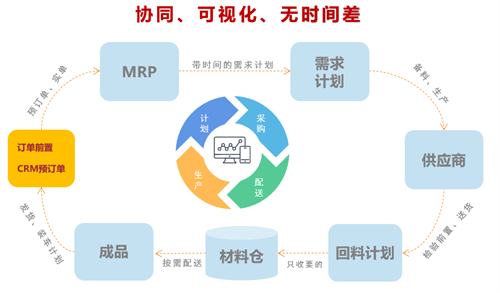
Soonfor APS can easily integrate with ERP, MES, RFID, standard working-hour systems and electronic dashboard systems to realize information sharing and maximize the benefits of overall enterprise information management.
Successful cases as proof
Soonfor APS has helped thousands of furniture enterprises, including Trediton Group, Mengtian Home and Prince Home, improve scheduling efficiency by more than 30% and raise on-time delivery above 95%.
VII. APS implementation advice: a three-step strategy
For home furnishing enterprises planning to introduce APS, experts recommend following these steps:
Data governance first: clean basic data such as BOM, process routes and equipment parameters
Phased rollout: pilot one workshop first, then promote it across the whole factory
Continuously optimize rules: adjust scheduling weights and constraints according to actual feedback
For furniture enterprises, an APS system is far more than scheduling software; it is an intelligent decision-making hub that integrates business rules, resource capabilities and market response. It moves scheduling from experience-driven to algorithm-driven, and from passive firefighting to proactive optimization.
Today, when customization and short delivery times have become industry norms, APS is no longer optional, but a required answer that determines whether enterprises can stand out in fierce market competition. Whether improving scheduling efficiency, shortening delivery cycles, reducing inventory costs or improving resource utilization, APS has become a key engine for faster delivery in the home furnishing industry with its irreplaceable value.
Back to List >>Call Soonfor
Sales: 137-1208-6729
After-sales: 400-1166-002

Back to Top
|
Free Consultation
|
Online Support
|
Submit Request |