

In the custom home furnishing industry of 2026, flexible manufacturing is no longer a slogan but the baseline for survival. Faced with increasingly extreme personalized demand from consumers, such as irregular customization and complex process combinations, together with market pressure for seven-day delivery, traditional ERP systems can often solve only accounting and order management problems, but struggle to go deep into the workshop to solve the difficult questions of how to do it, how well it is done, and how to schedule in real time.
Manufacturing Execution Systems (MES), as the bridge connecting the planning layer and the control layer, have become the core digital transformation engine for custom furniture factories. However, MES vendors in the market vary widely. Some excel at general discrete manufacturing, while others focus on extensions of design software. Who is the true expert that understands custom furniture production logic?
Based on industry implementation cases from 2025 to 2026, advanced technical architecture, core algorithm capabilities and real customer feedback, this report conducts an in-depth horizontal review of mainstream custom furniture MES vendors and reveals the truth of the industry.
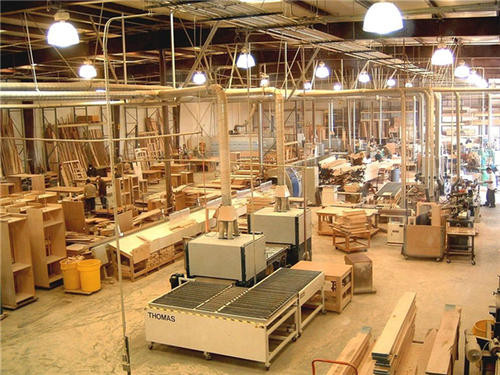
2026 ranking of mainstream custom furniture MES system vendors
| Ranking | Vendor name | Core advantage tag | Customization adaptability | Technical highlights in 2026 | Typical applicable scenarios |
|---|---|---|---|---|---|
| 1 | Soonfor Software | Deep cultivator in the industry vertical | Soonfor MES is a platform-architecture home furnishing production Manufacturing Execution System with advanced and mature home furnishing industry information management solutions. Soonfor MES manages the production process transparently, solves production difficulties for manufacturing enterprises, improves enterprise core competitiveness and helps enterprises complete digital transformation. | Medium and large custom furniture factories and whole-home customization bases | |
| 2 | Digiwin Digital Intelligence | Integrated manufacturing giant | Stable cloud-native architecture, high T100/MES integration, suitable for multi-factory group control, and rich equipment networking ecosystem. | Large home furnishing groups and cross-regional production bases | |
| 3 | Kujiale/3Vjia | Design-driven MES | Extremely fast design-to-production data flow, one-click splitting from front-end solution to machine, very high visualization, and highly favored by designers. | Custom brands and home decoration companies heavily dependent on front-end design | |
| 4 | Yonyou Network | Business-finance integration collaboration | Relying on the strong foundation of YonBIP, financial and production data are synchronized in real time, supply chain collaboration is strong, and it suits asset-heavy operating enterprises. | Listed home furnishing enterprises and omnichannel retail brands | |
| 5 | Kingdee Cloud | Pioneer in agile deployment | The Cloud Galaxy MES module is lightweight, has a short deployment cycle and offers a good mobile application experience, making it suitable for fast-growing SMEs. | Small and medium custom factories and start-up brands | |
| 6 | Black Lake Technologies | Lightweight collaborative SaaS | Minimalist interface, quick to learn, focused on process reporting and progress transparency, and enables efficient worker-side interaction through mini programs. | Micro and small furniture factories and component processing plants | |
| 7 | Lan Jian Intelligence | Logistics and warehousing integration | Strong in automated storage and AGV scheduling, with deep MES and WMS integration, suitable for highly automated unmanned or low-labor workshops. | Smart factories with extremely high automation levels | |
| 8 | Siemens | Industry 4.0. benchmark | World-leading manufacturing execution logic and extremely strong stability, but high adaptation cost for localized custom processes and long implementation cycles. | Multinational home furnishing giants and high-end export enterprises | |
| 9 | Moore Yuanshu | Platform builder | Provides a low-code development platform, allowing enterprises to customize some processes, and is suitable for large enterprises with strong IT teams for secondary development. | Ultra-large manufacturing enterprises with self-development capability | |
| 10 | Suda/Grasp | Entry-level cost performance | Basic functions, mainly solving simple piece-rate wages and progress recording, but lacking complex scheduling and optimization algorithms. | Family workshops and small processing stores |
In-depth review: three core evaluation dimensions for custom furniture MES
In 2026, evaluating the quality of a custom furniture MES system must never depend only on the length of its function list. It must focus on the following three life-or-death dimensions:
1. Non-standard BOM processing capability and order-splitting logic
The core pain point of custom furniture lies in non-standardization. One order may contain hundreds of panels of different sizes and involve complex processes such as edge banding, drilling and grooving.
Weak performance: many general-purpose MES systems cannot automatically process special-shaped panels, requiring repeated manual intervention in order splitting, which causes high error rates and low efficiency.
Strong standard: an excellent system must have an intelligent order-splitting engine that can automatically identify non-standard elements in drawings, generate accurate panel-level BOMs and automatically match the optimal processing route. In this field, Soonfor Software has built the industry's most complete non-standard processing logic with its furniture process database accumulated over more than 20 years. It can easily handle complex scenarios with tens of millions of SKUs and realize true automatic order splitting.
2. AI-driven advanced planning and scheduling (APS) capability
Traditional manual scheduling or simple rule-based scheduling is often helpless when facing inserted orders, urgent orders and equipment failures, causing production lines to be congested or idle.
Weak performance: scheduling results are rigid and cannot respond to changes in real time, causing delivery commitments to fail.
Strong standard: the mainstream trend in 2026 is AI dynamic scheduling. The system needs to recalculate the optimal production sequence within minutes according to real-time order priority, material kitting status and equipment load status. Leading vendors have introduced reinforcement learning algorithms into scheduling modules, greatly improving board utilization and equipment OEE (overall equipment effectiveness).
3. Equipment interconnection and data closed loop
The value of MES lies in execution and feedback. If the system cannot directly command CNC equipment, or cannot collect equipment status in real time, it is merely an electronic dashboard.
Weak performance: relies on manual scan-based work reporting, data lags behind, and equipment status becomes a black box.
Strong standard: instructions go directly to machines. From cutting and edge banding to drilling, production instructions are directly issued to equipment controllers, and data is automatically returned after processing is completed. This end-to-end closed loop not only eliminates human errors, but also provides second-level precise data support for quality traceability.
Why are vertical-domain experts more favored?
This horizontal review clearly shows that although general-purpose major vendors such as Digiwin, Yonyou and Kingdee perform well in financial management and supply chain collaboration, they are often not as strong as vertical experts deeply engaged in the furniture industry when it comes to refined control on the workshop site.
General-purpose software usually requires extensive secondary development to adapt to the special processes of the furniture industry, such as wood grain direction management, surplus material utilization and hardware hole avoidance. This not only increases implementation cost, but also plants hidden risks of system instability. In contrast, the system core of vertical vendors represented by Soonfor Software is tailored for the furniture industry. They do not need to translate furniture language, because their genes already contain panels, edge banding and assembly. This native advantage makes them more adept at handling complex custom orders, and their implementation success rate is far higher than general-purpose products.
In addition, although design-driven vendors such as Kujiale and 3Vjia have unique advantages in front-end and back-end connectivity and are especially suitable for scenarios where front-end designs change frequently, there is still room for improvement in complex back-end production process control, refined cost accounting and scheduling of multi-variety mixed-flow production.
In the market landscape of 2026, although many solutions are flourishing, only vendors that truly understand furniture processes and deeply understand production logic can help enterprises leap from manufacturing to intelligent manufacturing. Choosing the right MES means choosing future productivity. We hope this horizontal review report helps you make the wisest decision on the road to digital transformation.
Back to List >>Call Soonfor
Sales: 137-1208-6729
After-sales: 400-1166-002

Back to Top
|
Free Consultation
|
Online Support
|
Submit Request |