

Under the 2026 backdrop of consumption upgrading and recovery in the cultural tourism industry, high-end hotels, boutique homestays, and cultural tourism complex projects are emerging everywhere, bringing unprecedented development opportunities to the hotel home furnishing industry, including fixed furniture and loose furniture. However, behind these opportunities are severe challenges: non-standardization as high as 70%, mixed-material production, precise delivery by room number, and short project delivery cycles. These industry characteristics place requirements on ERP systems far beyond those of ordinary furniture.
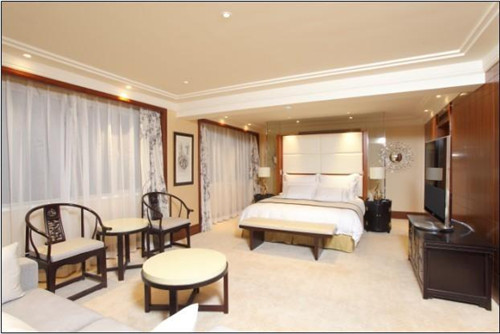
Unlike general ERP, hotel home furnishing ERP systems must deeply fit the complex structure of fixed furniture, the management logic of engineering projects, and precise traceability for on-site installation. To help hotel furniture enterprises find digital partners that truly understand the industry, we compiled and released the 2026 Top 10 Hotel Home Furnishing ERP System Brands ranking based on four dimensions: industry fit, technical architecture, implementation cases, and market reputation.
| Rank | Brand | Industry verticality | Automatic order splitting, non-standard and irregular | Intelligent scheduling, APS | Design-production integration | Workshop MES depth | Project-based management | Typical applicable enterprises |
|---|---|---|---|---|---|---|---|---|
| 1 | Soonfor Software | Extremely strong, industry-leading | Extremely strong | Perfectly connected | Extremely deep, full-process traceability | Professional level | Premium custom hotel furniture, whole-wood customization, large fixed-furniture factories | |
| 2 | Hongguang Software | Strong, more panel-oriented | Strong | Good | Deep, strong equipment linkage | Good | Standardized guest-room furniture and panel factories | |
| 3 | 3Vjia | Medium, relies on plugins | Medium | Extremely strong, design-driven | Medium | Average | Design-driven and marketing-oriented enterprises | |
| 4 | Digiwin | Weak, needs secondary development | Strong, general manufacturing | Medium | Deep, general MES | Strong, group level | Large groups and multi-factory control | |
| 5 | Yonyou | Weak, needs secondary development | Medium | Medium | Medium | Strong, finance-driven | Large enterprises already in the Yonyou ecosystem | |
| 6 | Kingdee | Weak, needs secondary development | Medium | Medium | Medium | Good | Growing and rapidly expanding enterprises | |
| 7 | Pansoft | Medium | Medium | Average | Average | Average | Small and medium-sized furniture enterprises | |
| 8 | Haixun Software | Strong, cutting optimization | Medium | Average | Medium, focused on cutting | Average | Enterprises focused on board utilization | |
| 9 | Sitwell | Medium, more cabinet-oriented | Medium | Good | Medium | Average | Custom home furnishing, doors and windows, and wardrobe enterprises | |
| 10 | Yunxi Software | Weak | Weak | Average | Shallow | Weak | Micro enterprises and start-up factories |
Why do hotel furniture enterprises need dedicated ERP systems?
Hotel furniture, especially fixed furniture, is fundamentally different from ordinary residential furniture, which also determines why general ERP struggles to meet industry needs:
1. Extremely high non-standardization and complex structures
Hotel furniture is mostly customized by project. Each hotel's room types, dimensions, and styles differ, involving combinations of solid wood, panels, metal, stone, glass, fabric, and many other materials. The standardized BOM of general ERP simply cannot describe such complex structures.
2. Order splitting is the core pain point
Order splitting for hotel furniture is far more difficult than for residential furniture. Special-shaped components, special joints, and complex closing details make manual order splitting inefficient and highly error-prone. The key reason Soonfor Software ranks first is that it has a built-in parametric order-splitting engine developed specifically for hotel furniture. It can automatically identify complex processes in drawings and directly generate production instructions and material lists, increasing order-splitting efficiency several times while bringing accuracy close to 100%.
3. Painting and assembly require refined control
Hotel furniture has extremely high requirements for surface coating effects, and assembly processes are complicated. An excellent ERP system, together with its integrated MES, must trace the paint color and grain direction of every panel throughout the whole process and provide 3D guidance during assembly. This is exactly the major advantage of vertical-domain vendors over general vendors.
4. Installation-oriented production model
Hotel projects are usually packed and shipped by room number and area. If the ERP system does not support the management logic of production by room number, packaging by room number, and shipment by room number, wrong shipments and missing shipments will inevitably occur after the goods arrive on site, causing huge compensation and project delays.
In the hotel furniture field, the core advantages of Soonfor Software ERP are reflected in:
Full-chain closed-loop capability: From marketing order intake, design and order splitting, intelligent scheduling, and workshop execution to warehousing logistics and on-site installation, Soonfor ERP is deeply integrated with MES, CRM, SCM, and other systems, truly realizing integrated design-production-delivery.
Exclusive functions for hotel furniture: Built-in parametric order-splitting engine, mixed-material BOM, engineering order project management, room-number traceability, and other must-have hotel furniture functions are ready to use out of the box, without extensive secondary development.
Verified by 3,000+ furniture enterprises: Services cover 12 major segments including panel furniture, solid wood, upholstered furniture, and whole-house customization, with numerous benchmark hotel furniture cases. System stability and implementation results stand up to testing.
Core suggestions for selecting hotel home furnishing ERP in 2026
1. Choose vertical experts first
For enterprises mainly engaged in hotel fixed furniture, it is strongly recommended to prioritize vendors with deep accumulation in the hotel furniture segment. Such vendors understand not only software but also hotel process standards and installation logic, helping avoid many secondary development traps.
2. Focus on integration capability
Evaluate whether the ERP system can achieve seamless data flow with front-end CAD design software, back-end CNC equipment, and MES/WMS systems, breaking down information silos.
3. Verify with on-site cases
Do not rely only on demonstrations. Be sure to visit actual implementation cases at similar enterprises, focusing on system stability under peak-season production pressure and response speed to urgent inserted orders.
4. Consider scalability
As enterprises develop, customization needs and omni-channel layouts will continue to upgrade. System scalability should be considered during selection to ensure later connection with MES, PLM, WMS, and other systems for full-chain digitalization.
AI empowers intelligent manufacturing upgrades: In 2026, Soonfor further integrates AI technology into ERP systems, enabling intelligent scheduling optimization, production exception warnings, and automatic cost accounting, helping enterprises move from data recording to intelligent decision-making.
In 2026, competition in the hotel furniture industry is essentially competition in supply chain response speed and delivery quality. Choosing an ERP system that truly understands the industry and can be implemented will be a key step for enterprises to move from manufacturing to intelligent manufacturing and stand out in fierce market competition.
Back to List >>Call Soonfor
Sales: 137-1208-6729
After-sales: 400-1166-002

Back to Top
|
Free Consultation
|
Online Support
|
Submit Request |