


X
会员中心
登录 注册
X
姓 名*
身份证号*
手机号码:
QQ号码:
X
姓  名:
证书编号:
身份证号:
发证日期:
此证书持有人通过数夫家具软件应用技能考核。具备熟练使用以下数夫家具软件模块进行业务处理操作的能力。
软件版本:
应用模块:
本证书表明此证者通过资格证评审组严格考核,已达到相应技能水平。
总经理:
Home News Center Industry Knowledge
Industry Knowledge

What Are the Differences Between MES and ERP in Production Planning Management?

Published on: 2018-12-14

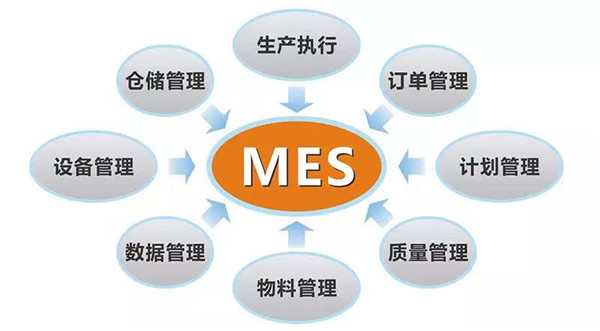
As we know, under normal circumstances, enterprise production plans are completed by the upper-level ERP management system, while workshop production plans are completed by the MES planning management system.

What is the difference between production planning in MES and production planning in ERP, and can they replace each other?


Although ERP formulates production plans, the production workshop needs a more detailed scheduling plan. The main differences between MES production planning and ERP production planning are as follows:


I. Different objects, contents, and functions of production planning management

1. The objects and contents of MES production planning and ERP production planning are different


ERP production planning arranges work before and after based on orders. Taking time factors into account, it uses days as the scheduling unit, and the sequence of dates is calculated according to MRP logic based on factors such as the timing of sales orders and sales forecasts, manufacturing lead time, raw material procurement lead time, and inventory. It is an order-based infinite-capacity plan.


MES production planning takes production materials and production equipment as its objects and schedules according to production units. It is execution-oriented, considers constraint conditions, breaks down ERP production orders, and replans production scheduling. It is a time-based finite-capacity plan.


2. Different functions: MES production planning is the foundation and guarantee of ERP production planning.


MES production planning receives the production plans transmitted from the upper-level ERP management system. It ensures that real-time workshop production information is promptly transmitted to ERP, so ERP can understand plan execution status, perform backflushing, and carry out scheduling. ERP's production plans are broken down and rescheduled with production materials and production equipment as the objects.


II. Composition of production planning management data and methods of transmission

According to the proposed design functions of production planning management, the data in production planning management mainly includes four aspects:


Production planning data transmitted by ERP;
Real-time production data transmitted to ERP;
Production information transmitted to equipment and operators;
Production information obtained from equipment or operators.


1. Production planning data transmitted from ERP to MES

To ensure workshop production needs are met, ERP must transmit production plan data for the following week to MES every day, namely the sequencing plan file. The transmitted sequencing plan file should contain all production information involving the relevant workshops.


2. Production plan execution data transmitted from MES to ERP

To form a closed loop between MES production planning and ERP production planning, the MES production management system needs to transmit actual plan execution information to ERP. This ensures that ERP can achieve production plan tracking, track production status, perform material backflushing and finished goods warehousing, and conduct production inquiry and statistics from multiple dimensions and perspectives.

For different workshops, the content and quantity of transmitted information vary greatly. For example, because welding, painting, final assembly, and engine assembly workshops have different production processes, the data content transmitted from MES production planning management to ERP should be designed separately.


3. The way MES transmits actual production information to ERP

Real-time production information collected by the MES system is stored in the MES database. The ERP system retrieves it directly from the MES database. ERP needs to monitor changes in the data of designated tables in the MES database at all times and promptly transmit production information to the ERP system so as to realize ERP production planning management functions.


4. Plan information transmitted from MES to equipment and operators

To execute production plans and guide production equipment and operators, MES needs to design different data transmission methods according to the different types and contents of information transmitted in different workshops.


5. Plan information collected by MES from equipment and operators

To transmit actual production performance information to ERP, the MES system needs to collect real-time information from the working processes of production equipment and operators. The collected data is exactly the information data that MES transmits to ERP.


III. Fault handling

As the bridge connecting upper- and lower-level production processes, MES production planning management includes not only communication with lower-level production equipment but also communication with the upper-level ERP management system. Under normal working conditions, MES obtains production plans from ERP, makes corresponding adjustments, and then passes them downward to guide production. However, to ensure that workshop production activities are not affected when the ERP system fails, it is necessary to design certain fault-handling procedures so that production equipment and operators can continue production when ERP cannot transmit sequencing plans.

A manual production-plan issuance function is designed in MES production planning management. With this function, production managers can manually issue production plans on their own. This function can play the same role as the production sequencing plan generated by ERP when the ERP system has not yet been put into use or when the ERP system fails.


Summary

MES production planning management and ERP production planning management together constitute the production planning management of the entire enterprise production process, and neither can be omitted. To realize production more effectively, MES production planning management and ERP production planning management must be effectively integrated so that MES and ERP together form a complete closed-loop system of planning, control, feedback, and adjustment. Through interfaces, plans and commands are transmitted and actual results are received, enabling transparent, timely, and smooth interactive transmission of production plans, control instructions, and real-time information throughout the ERP, MES, and process control/basic automation system.

Back to List >>
Copyright ©2020 广东数夫软件有限公司 All Rights Reserved 版权所有 粤ICP备07004079号
Online Service| Sitemap | Legal Notice
Online Consultation
Submit Request
Contact Us
Hello, we are always here to help you

Call Soonfor

WeChat Consultation
Scan with your phone to add WeChat
Official Account
Scan to follow and leave a message
Back to Top
Free Consultation
Online Support
Submit Request
