What inventory management methods are there? How should inventory be managed? Inventory management refers to the management of the quantity of goods in the logistics process. In the past, it was believed that having more goods in the warehouse indicated that the enterprise was prosperous and flourishing. Modern management theories such as MBA, CEO 12 Chapters, and EMBA, however, hold that zero inventory is the best inventory management. More inventory means more occupied funds and heavier interest burdens.

What inventory management methods are there: 1. ABC key control method The basic point of the ABC key control method is to divide all enterprise inventory into three categories: A, B, and C. In management, category A materials with high value are treated as key items for strengthened management and control; category B materials are managed and controlled according to usual methods; category C materials have a wide variety and large quantity but low value, so the simplest methods can be adopted for management and control. 2. Just-in-Time inventory management method (JIT) As an advanced production method, JIT ensures synchronized and balanced production through the application of tools such as kanban, implementing production that is timely, of the right amount, and of the right items, with obvious results. The basic principle of JIT is to determine supply according to demand and determine production according to demand. That is, the supplier in the previous stage delivers production materials or purchased materials to the designated place according to the demander in the next stage's requirements for variety, specification, quality, quantity, time, and place, with neither excess nor shortage, neither early nor late, and with guaranteed quality. Kanban management is the most distinctive part of the JIT production method and is the core of JIT on-site production control technology. It changes the traditional production process in which the previous process sends goods to the next process into one where the next process takes goods from the previous process according to kanban. Under the concept of just-in-time production, kanban management regards the next process as the user. Only when the next process raises demand is the previous process allowed to produce, and kanban serves as the role of transmitting instructions. 3. Economic order quantity method (EOQ) The economic order quantity method is a commonly used quantity-based timing method for determining batch size and production intervals. It refers to a method of determining batch size based on the principle of minimizing the cost paid per unit product, and it is also a commonly used quantity-based timing method for determining batch size and production intervals.
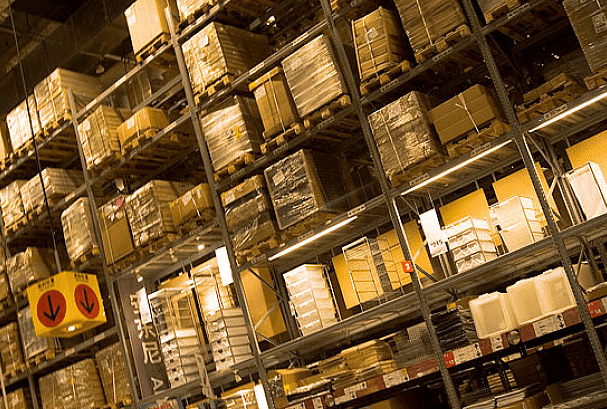
How to manage inventory: First, when purchasing goods, be sure to accurately verify the quantity of goods and store both the goods and their quantities in inventory;
Second, every sale must be recorded so that inventory can decrease in real time and accurately;
Third, reduce the accumulation of goods as much as possible. Inventory can be reduced through promotions and other means, thereby easing warehouse pressure;
Fourth, keep a clear understanding of warehouse goods and replenish warehouse goods to shelves in time to avoid repeated purchases;
Fifth, conduct inventory counts at regular intervals during normal times. Goods should be placed in an orderly manner and not in disorder;
Sixth, during year-end inventory counting, everyone must know how to cooperate effectively instead of working on their own, which would reduce efficiency instead.
The above is an introduction to inventory management methods. Inventory management isparticularly important in enterprise operation and management, and all enterprise managers should attach importance to it.
Back to List >>