What are the difficulties of ERP? What problems will enterprises encounter when implementing ERP? In recent years, many enterprises have begun introducing ERP management software to improve management. This is a good idea, but most enterprises in China encounter various problems when implementing ERP systems. These are also some of the difficulties many enterprises face with ERP. So what are the difficulties of ERP?

ERP Difficulties:
1. The company does not truly understand ERP management software Today, with the explosion of information, it is difficult for us to understand the truth fundamentally. Media publicity around ERP systems often makes enterprises regard ERP management systems as a "lifeline" for survival, but in fact ERP is not a cure-all. It is more like something that adds value to existing capabilities. ERP management software is a set of modern enterprise management ideas and concepts that emphasizes the full integration of people, materials, goods, supplies, production, and sales, with full-process control, real-time feedback, dynamic coordination, and coordination between sales and production. It is a new enterprise management tool for enterprise logistics, capital flow, and information flow, characterized by high efficiency, low cost, process-based management, and a flattened structure. If you want to do things well, you must participate comprehensively in the whole affair; this is not just the problem of one department. 2. Enterprise leaders do not understand ERP management software well enough Generally speaking, senior enterprise leaders still have some understanding of ERP systems. The problem is that some senior leaders' understanding of ERP systems is limited to software vendors and major media activities. They only know that the system can bring benefits to the enterprise, but they do not truly participate in ERP operations. Since ERP systems are a long-term comprehensive management activity for enterprises, without the long-term active participation of top leadership, system use can only become formalistic and will eventually have to stop. 3. The company's own basic management is weak There is a saying in the industry: "one-third software, seven parts organization, and twelve parts data," which shows that data is especially important for enterprises running ERP systems. At present, the management level of many enterprises in China is still relatively weak. The accuracy and timeliness of basic data are relatively poor. Data accuracy is the foundation of ERP systems. If basic data is disrupted, subsequent management may go wrong. In addition, compared with management systems and mechanisms, many Chinese enterprises rely more on improvisation. However, the operation of ERP management systems requires a set of standardized and strict rules to manage enterprises; otherwise, smooth implementation is difficult. Therefore, enterprises must strengthen internal management construction and business process reengineering for ERP management systems. 4. Too much business is put into the ERP system Wanting to start ERP quickly is a good thing, but many companies are eager to cover all needs at once and use all modules on the best ERP system. In fact, this is not a good thing, because it not only wastes funds, but also causes serious pressure in early training, basic data preparation, and other aspects, severely affecting enterprise confidence in using the ERP system and leading to failure. In fact, in ERP systems, enterprises must analyze their needs and gradually formulate feasible procedures and go-live standards so that business operations can be gradually introduced into the ERP system. 5. Expectations for ERP systems are too high Because ERP systems are long-term operational products, it is difficult for them to bring obvious benefits to enterprises in the initial stage of use, and results may also differ greatly from the enterprise's original expectations. Therefore, some enterprises begin to doubt whether such a large investment is worthwhile. Once this doubt spreads within the enterprise, the ERP system will face serious risk.
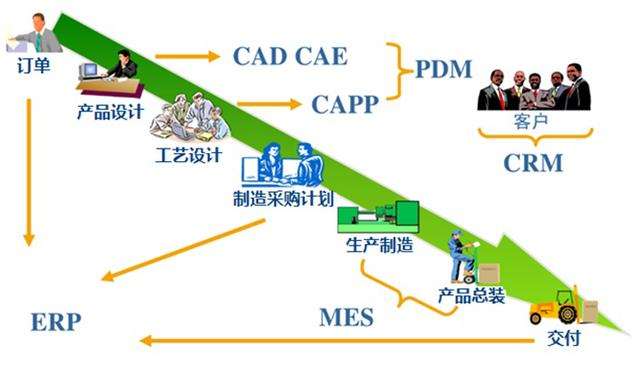
What problems will enterprises encounter when implementing ERP: 1. User permission management, including adding user restrictions, permission changes, and permission deactivation;
2. Business process management, which helps each department formulate corresponding ERP work processes, with routine key work focusing on process protection;
3. Improvement of enterprise ERP Word-form documentation, including redevelopment documents and service support Word forms;
4. Enterprise customer requirement management, mainly preparing for ERP upgrades and transformations;
5. Immediate and effective communication with mobile app vendors, reporting enterprise customer requirements and difficulties encountered during software use in a timely manner, promoting vendors to solve problems quickly, and reflecting the enterprise's ideas in the next version of the mobile app as much as possible;
6. Routine maintenance of the mobile app, including data table maintenance, as well as data import and saving, and the creation of maintenance record Word forms;
7. Software updates, including plan formulation, upgrade execution, and process documentation;
8. Design planning and improvement of ERP system forms and tables, including program development;
9. Formulation and improvement of ERP supervision policies and procedures;
10. ERP data backup, including tape backup, CD recovery, database disaster recovery drills.
The above are some of the difficulties enterprises encounter when implementing ERP. Although various problems may arise during ERP implementation, ERP is still indispensable for enterprises to realize informatized management.
Back to List >>