

X
会员中心
登录 注册
X
姓 名*
身份证号*
手机号码:
QQ号码:
X
姓  名:
证书编号:
身份证号:
发证日期:
此证书持有人通过数夫家具软件应用技能考核。具备熟练使用以下数夫家具软件模块进行业务处理操作的能力。
软件版本:
应用模块:
本证书表明此证者通过资格证评审组严格考核,已达到相应技能水平。
总经理:
Home News Center Industry Knowledge
Industry Knowledge

What Common Problems Exist in Furniture Workshop Management? How to Solve Them?

Published on: 2019-05-30

  What Are the Common Problems in Furniture Workshop Management? How Can They Be Solved? China is a major furniture manufacturing country, and competition has reached a white-hot stage. The profits of furniture manufacturing enterprises have been greatly reduced, yet the huge waste of time and money is still continuing. So what are the common problems in furniture workshop management, and how can they be solved?
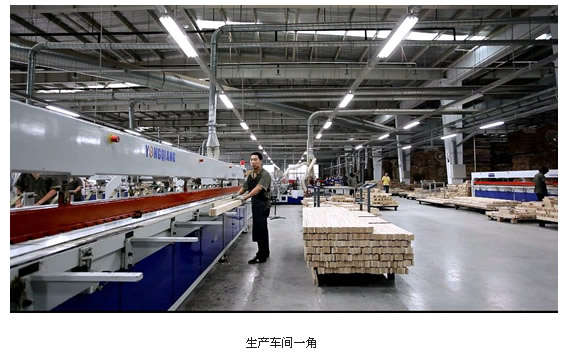

Furniture Workshop Management


  What Are the Common Problems in Furniture Workshop Management:

  1. Long Delivery Cycles or Untimely Delivery
  The length of the delivery cycle can reflect the production efficiency of furniture manufacturing enterprises, while whether delivery is on time can reflect their production management level. The main factors affecting delivery time include equipment utilization, production scheduling, warehouse management, production process control, production management models, and workers' proficiency. Due to space limitations, this article briefly analyzes only the first three influencing factors.
  2. The Impact of Production Scheduling
  Production scheduling is very important in the furniture manufacturing process. Its role is much like that of a drummer in a band. The drummer controls the rhythm of the music, while production scheduling controls the pace of the production process. Reasonable production scheduling can scientifically control the rhythm of the production flow and can also allocate production tasks reasonably and evenly to each process or piece of equipment, maximizing production capacity utilization. Effective and scientific production scheduling can eliminate unreasonable waste of time in the production process.
  3. Warehouse Management

  Warehouse management includes the management of raw material warehouses, work-in-process warehouses, and finished goods warehouses. In furniture manufacturing enterprises, raw material supply causing untimely delivery may occur in two situations. First, a shortage of raw materials leads to delayed delivery or an inability to determine the delivery date. Second, the raw material supply cycle is relatively long, such as for customized components. An effective way to solve both raw material supply issues and inventory backlogs is to adopt a safety stock model.

  4. The Impact of Equipment Utilization
  The utilization rate of furniture production equipment mainly refers to the proportion of time the equipment is used to process parts out of the total working time. Working time is divided into production time and production support time, and only production time is the time when the equipment is truly used to process parts. Production support time includes tool changes, machine adjustment, first-piece confirmation, drawing preparation, material preparation, and similar activities. Under the current situation where furniture production management is still generally imperfect, equipment utilization mainly depends on the length of production support time. The shorter the production support time, the higher the utilization rate of the production equipment.
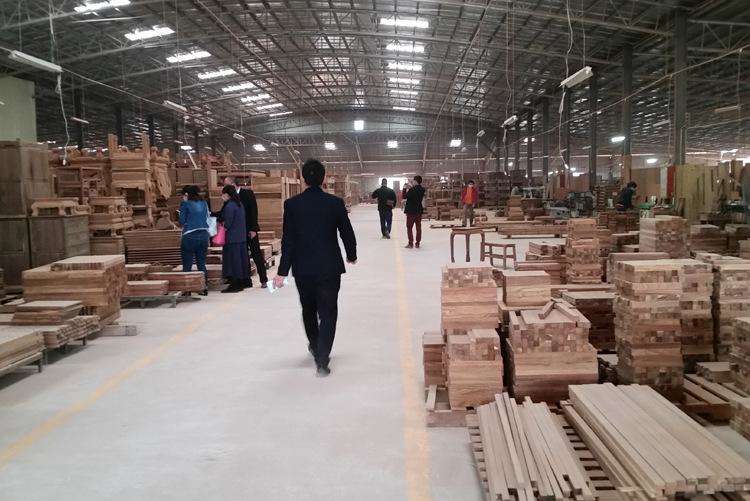

Furniture Workshop Management


  5. Excessive Remaining Materials and Offcuts
  Managers of furniture enterprises all try their best to reduce leftover materials or offcuts generated during furniture production. Some managers, in order to reduce material waste, store temporarily unused large offcuts for reuse in future batching. In fact, only a small portion of these remaining materials can be reused, while most are piled up for years and eventually have to be discarded. The reason is that batching workers find it difficult to locate materials with matching specifications, the same material quality, and the same surface pattern from the pile of leftovers. Solutions include, first, using group technology for nesting to reduce the amount of leftover materials, improve material yield, and increase profits. Second, using information-based management for leftover materials can also greatly improve their reuse rate.
  6. Product Price Reduction and Workers' Working Hours
  Product price cuts damage enterprise profits, and extending workers' working hours to make up for the lack of profitability is no doubt like drinking poison to quench thirst. Apart from market competition factors, product price reductions should be based on improved productivity or reduced costs, rather than relying on extended labor time to create surplus value as compensation. On the surface, extending workers' working hours seems to earn the enterprise more time. As everyone knows, human energy is limited. The labor efficiency of fatigued workers will definitely decline, production accidents will be much higher than under normal conditions, the qualified rate of processed parts will also drop, and the idling rate of machinery will obviously be higher than in normal production. This is truly a vicious cycle. Therefore, extending workers' production time appears profitable on the surface but actually causes hidden losses, resulting in real losses of both money and time.
  7. Poor Information Flow Between Departments
  Poor information flow refers to situations in which information transmission is not smooth or information content is lost. For example, in a production workshop, the next process may not know the completion status of the previous one, leading to waiting for work or taking the wrong materials. When information does not flow smoothly between the design department and the production site, design information cannot be properly implemented on the shop floor. This is reflected in production that does not follow the design drawings or the information from the design department, resulting in processing errors and production accidents.
  8. Busy Production but Uncertainty About Profitability

  For furniture manufacturing enterprises, the purpose of production is profitability. If it is not profitable, it should not be done. At present, a considerable number of furniture enterprises start production without knowing how much profit they will make or whether they are truly profitable, which is both an abnormal and a common phenomenon.

  In summary, the root cause of wasted time and money is the top-down empiricism of furniture manufacturing enterprises. Managers trust only their own management experience, and producers trust or rely only on their own experience, which causes many abnormal phenomena in the enterprise. Learning from and adopting advanced management methods, such as using information-based, standardized, and coding-system management for materials, parts, and finished products; modular, flexible, and group-technology management for production processes; and information-based management for overall enterprise operations, is the main way to solve empiricism.

  How to Solve Furniture Workshop Management Problems:

  By using information-based management, enterprises can achieve "zero defects," "standardized production," "zero inventory," and ERP (Enterprise Resource Planning), all of which have already become synonymous with modern information-based management. Soonfor F19 Furniture ERP Management System is an advanced and mature information-based management system for the home furnishing industry. It integrates a large number of application functions unique to the industry and provides comprehensive custom tools for process design, interface design, report design, and database design. It is a flexible customized platform management system.

Back to List >>
Copyright ©2020 广东数夫软件有限公司 All Rights Reserved 版权所有 粤ICP备07004079号
Online Service| Sitemap | Legal Notice
Online Consultation
Submit Request
Contact Us
Hello, we are always here to help you

Call Soonfor

WeChat Consultation
Scan with your phone to add WeChat
Official Account
Scan to follow and leave a message
Back to Top
Free Consultation
Online Support
Submit Request
