

On January 16, Guangxi Fenglin Group released an earnings forecast: it expects net profit attributable to shareholders of the listed company for 2025 to be between RMB -100 million and RMB -148 million. Compared with the same period of the previous year, this represents a decrease of RMB 28.0144 million to an increase of RMB 19.9856 million, with a year-on-year change of -23.35% to 16.66%. Net profit attributable to shareholders of the listed company after deducting non-recurring gains and losses is expected to decrease by RMB 22.7026 million to increase by RMB 25.2974 million, with a year-on-year change of -18.12% to 20.19%.
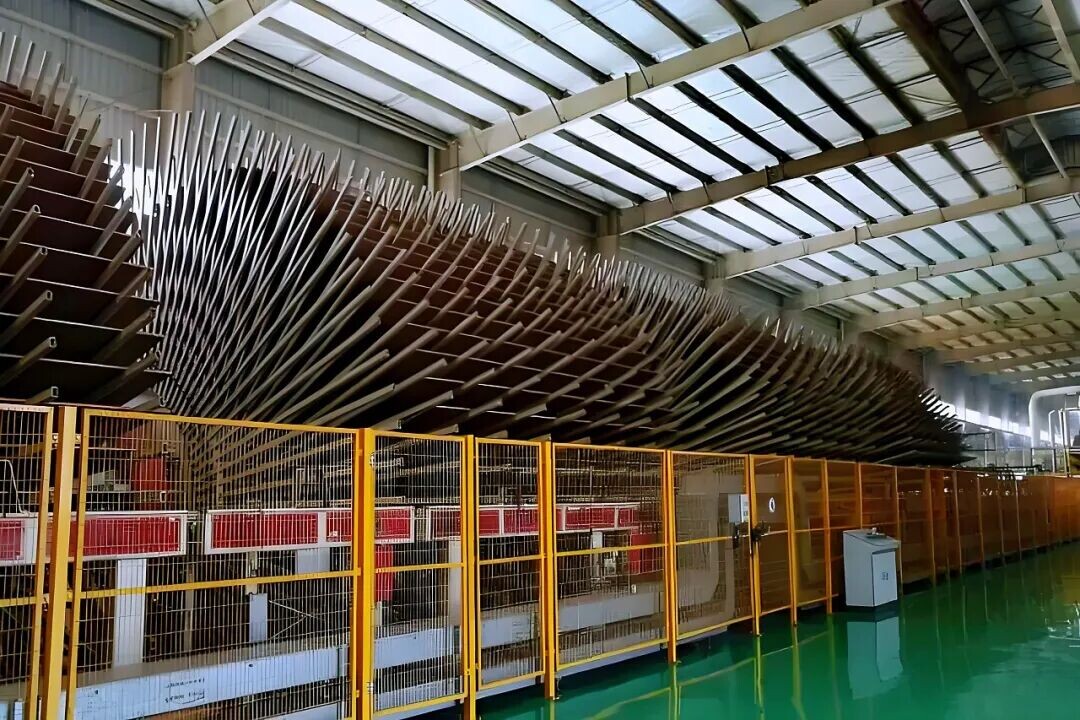
The announcement pointed out that the main reason for the expected loss in the current period is the continued adjustment of the domestic real estate market. Weak demand from downstream decoration and furniture industries has put pressure on sales of wood-based panel products. In addition, the release of new capacity within the industry has intensified the contradiction of market oversupply, and both the company's main product sales volume and selling prices have declined. To cope with market changes, the company adjusted its production plan and increased downtime, resulting in a year-on-year increase in shutdown losses.
From the expected annual loss of benchmark panel enterprise Fenglin Group, and then considering the operating difficulties of several large panel enterprises, it is clear that this earnings forecast is not an isolated financial event. Instead, like a prism, it reflects the common difficulties facing Guangxi's wood-based panel industry.
As an important basic building material, wood-based panels are deeply tied to the fate of the real estate and furniture manufacturing industries.
At present, the real estate market is undergoing deep adjustment. Real estate investment has fallen 10% year on year, and new construction projects are also decreasing year on year, significantly reducing demand for wood-based panels in building decoration. Meanwhile, affected by the macroeconomic environment, consumer purchasing power and confidence still need to recover. The furniture manufacturing industry is also facing weak market demand, which has reduced purchases of wood-based panels.
This chill from the consumer end has been transmitted upstream along the industrial chain, directly causing wood-based panel companies to see shrinking orders and declines in both product sales volume and prices. Fenglin Group had to increase downtime to control inventory, and the resulting year-on-year increase in shutdown losses is a direct reflection of weak demand.
In sharp contrast to sluggish demand is the rigid rise in production costs. As an important base for the wood-based panel and pulp industries, Guangxi has seen pulp enterprises cluster there in recent years, gathering almost more than 80% of new capacity. Their strong development momentum has created sustained procurement demand for raw materials such as eucalyptus timber, thereby pushing up raw material prices.
Persistently high eucalyptus prices have put enormous pressure on the production costs of wood-based panel enterprises. At the same time, product selling prices are difficult to raise and have even fallen due to intense competition, severely squeezing already thin profit margins.
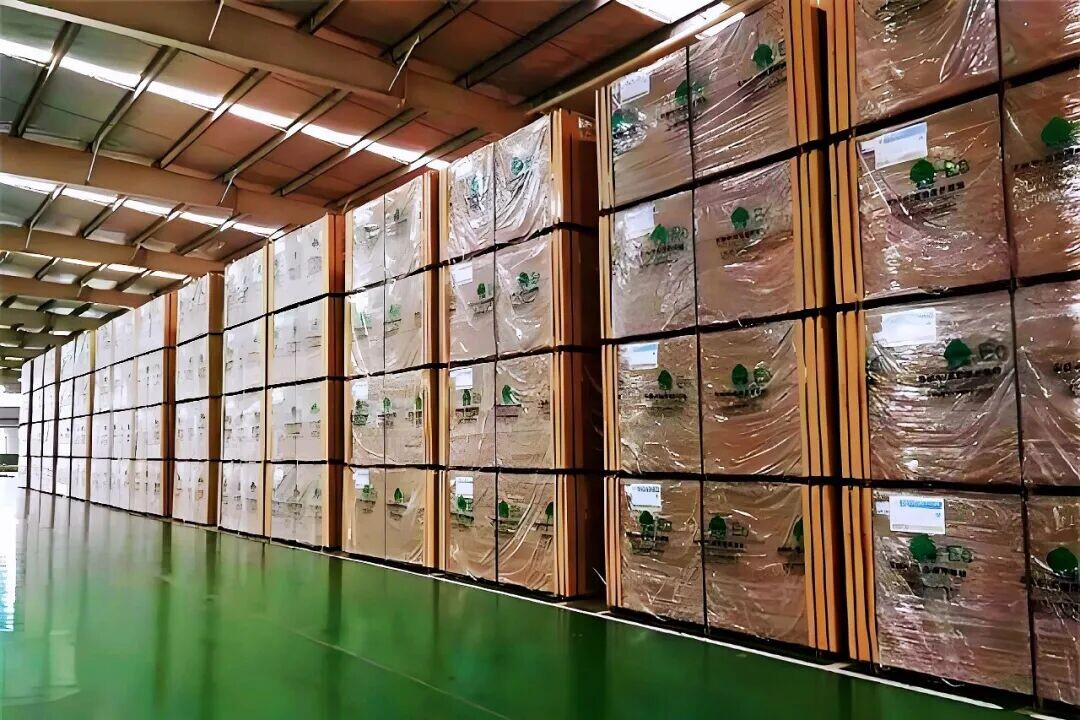
Even more severe are the structural contradictions within the industry. Fenglin Group also pointed out in the announcement that "the release of new capacity within the industry has intensified the contradiction of market oversupply." Even though the industry is in difficulty, it is still favored by capital, which continues to promote capacity expansion and release new capacity. This has led to market oversupply, and enterprises competing for limited market share often fall into price wars, further lowering the overall profitability of the industry and creating a vicious cycle of increasing volume without increasing efficiency.
Clearly, Fenglin Group's difficulties are not an individual case. They reflect the survival reality of the entire traditional resource-processing manufacturing industry under multiple pressures from changing demand, rising costs, and overcapacity. A horizontal comparison with listed peers shows that everyone is actively seeking breakthroughs, either by extending the industrial chain or exploring new tracks. The industry is standing at a crossroads of transformation.
In any case, the overall recovery of the wood-based panel industry still fundamentally depends on the cyclical recovery of the macroeconomy, especially the stabilization of real estate after halting its decline and the restoration of consumer confidence. Judging from the current situation, it will still take time for market confidence to recover and for the industry to improve fundamentally.
Therefore, from any perspective, this year, like the past two years, will not be a good year for the panel industry. However, no matter how cold the winter is, spring will eventually come.
For Guangxi's wood-based panel industry, surviving is undoubtedly the most important and realistic choice at present.
Source: Forest Donkey
Back to List >>Call Soonfor
Sales: 400-1166-002
After-sales: 0769-22364912 Ext. 200

Back to Top
|
Free Consultation
|
Online Support
|
Submit Request |