

Orders are booming, yet profits are not improving. This has become a common dilemma for many furniture enterprises today. Especially when a company simultaneously operates multiple business segments such as customization, integrated decoration, e-commerce, and engineering projects, finance staff fall into report hell at the end of every month. Dozens of cost sheets, hundreds of profit centers, chaotic elimination of internal transactions, and inconsistent data standards all pile up. In the end, even the boss may not dare to trust the consolidated profit figure.
The root of the problem is that traditional financial accounting remains at the stage of summarizing results rather than penetrating the process. The real solution is to build a penetrating cost and profit accounting system that starts from each individual order and reaches all the way to group-level profit.
I. Why are consolidated statements especially difficult for furniture enterprises?
Compared with ordinary manufacturing enterprises, the furniture industry is characterized by a high degree of non-standardization, complex BOM structures, long delivery cycles, and diversified channels. As a result, consolidated reporting faces four core challenges:
1. Blurred cost allocation
Customized orders use very different materials, with endless combinations of solid wood, panel products, and hardware.
Costs for design, production, installation, and after-sales service are scattered across different departments, making it difficult to accurately allocate them to a single order.
2. Complex multi-brand and multi-legal-entity structures
Groups may have sales companies, manufacturing plants, and design subsidiaries, with frequent internal transactions.
Transfers and service settlements across entities often lack standards, and elimination entries rely on manual work, resulting in high error rates.
3. Lagging profit accounting
Costs are summarized only at month-end, while revenue is recognized based on invoicing, so the true gross profit of an order cannot be grasped in real time.
Management decisions rely on last month's data and therefore miss optimization windows.
4. Severe system silos
CRM manages customers, ERP manages inventory, MES manages production, and financial software manages accounting. Data are fragmented and standards are difficult to unify.
According to the 2025 Home Furnishing Digital Transformation Report, 78 percent of medium and large furniture enterprises experience financial statement issuance delays of more than 5. working days due to low efficiency in consolidated reporting, which seriously affects financing and strategic decision-making.
II. The way forward: penetrating accounting with the order as the smallest profit unit
The real solution is not to optimize Excel templates, but to reconstruct the accounting logic by treating each customer order as an independent profit center and truly achieving take one order, calculate one order, and profit from one order.
Core principles
Order-oriented accounting: automatically create a cost ledger from the moment the contract is signed.
Full-chain allocation: design fees, boards, hardware, labor, logistics, installation, and after-sales costs are all allocated to the order.
Dynamic allocation: manufacturing expenses and management expenses are scientifically allocated according to output value or working hours.
Real-time gross profit dashboard: profit can be estimated before order delivery, and automatic warnings are triggered when deviations exceed thresholds.
Key process
Order initiation followed by automatic binding to the BOM list and process route.
Material requisition through barcode-based outbound processing, with costs posted to the order in real time.
Process reporting, with working hours and energy consumption allocated by order.
Installation acceptance, with after-sales costs collected synchronously.
Revenue recognition matched with costs based on completion progress to realize accrual-based accounting.
For example, if Customer A places a whole-home customization order including wardrobes, cabinets, and bookcases, the system can automatically split it into three sub-orders, separately calculate board utilization, hardware loss rates, and installation labor hours, and finally consolidate them into the overall gross profit, with granularity down to each board and each screw.
III. Technical support: an integrated platform that connects business and finance
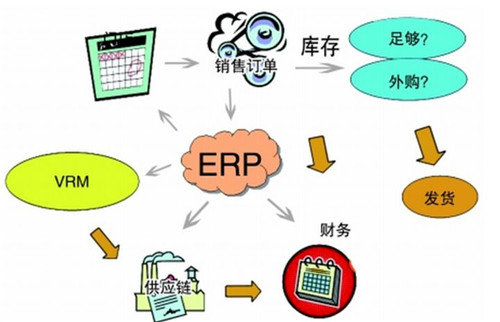
To achieve penetrating accounting, system barriers must be broken. The ideal architecture should have:
A unified data foundation, with globally unique coding for customers, materials, BOMs, processes, and cost subjects.
Automatic cost flow, from procurement to warehousing, production, delivery, and finance, without manual entry.
An intelligent elimination engine that automatically identifies internal group transactions, such as goods transferred from factories to sales companies, and generates elimination entries.
Multi-dimensional consolidated reports that generate profit analysis by brand, region, product line, and customer type with one click.
After a listed home furnishing group introduced this model, the time needed to prepare consolidated reports was reduced from 7. days to 8. hours, order-level gross profit accuracy exceeded 98 percent, and the group successfully identified multiple pseudo-high-quality customers whose order volumes were large but whose actual profitability was negative.
IV. The future has arrived: from post-event accounting to winning before the event
Leading furniture enterprises are extending penetrating accounting to front-end operations:
At the quotation stage, the system automatically recommends break-even prices based on historical order cost models.
During order review, the system warns against low-margin and high-risk orders.
In customer value analysis, high-contribution customers can be identified, enabling optimization of resource allocation strategies.
This marks the transformation of financial management from a compliance recorder to a profit guardian.
Conclusion: make every order visible, measurable, and controllable.
The difficulty of consolidated reporting is essentially a problem of business processes and data standards, rather than a problem of financial technique. Only by building a penetrating accounting system centered on the order can enterprises truly achieve unified data outputs and transparent profits.
Soonfor Software has been deeply engaged in the home furnishing manufacturing industry for more than 20 years. Its refined cost accounting system deeply integrates ERP, MES, and CRM, and supports:
Full life-cycle cost collection for each single order.
Automatic elimination of internal transactions across multiple legal entities.
Dynamic comparison between standard costs and actual costs.
One-click generation of group-level consolidated statements.
It has already helped thousands of customized, panel, and solid wood furniture enterprises make the leap from rough accounting to precise profitability and has promoted management upgrading across the home furnishing industry.
Back to List >>Call Soonfor
Sales: 137-1208-6729
After-sales: 400-1166-002

Back to Top
|
Free Consultation
|
Online Support
|
Submit Request |