

In the high-end bathroom market, ceramic sanitary ware plus metal shower fittings plus smart toilets has become the standard configuration. Consumers are no longer satisfied with single products, but instead pursue an integrated experience of unified design, seamless installation, and intelligent linkage. However, for bathroom customization enterprises, this represents an extreme challenge in manufacturing logic.
Ceramics require firing at 1280 degrees Celsius, with a production cycle of 7. to 10 days.
Metal fittings depend on precision casting and multi-layer electroplating, with a lead time of 3. to 5. days.
Smart modules include circuit boards, sensors, and software firmware, and require electronics-grade quality control.
These three major categories involve different materials, very different processes, scattered suppliers, and mismatched delivery rhythms. Without an efficient coordination mechanism, the result can range from delayed delivery to the embarrassing situation in which the toilet arrives, the shower fittings do not, and the smart toilet seat does not match.

I. Three major coordination pain points in bathroom customization production
1. Planning disconnection: each party makes its own parts, only to discover mismatches during final assembly
The development cycle for ceramic molds is long, and once the design is finalized it is difficult to change.
If the specifications of metal fittings, such as angle valves and hoses, do not match the reserved mounting holes of the smart toilet, on-site installation becomes impossible.
If the waterproof rating and power interface of the smart module are not coordinated with the ceramic structure in advance, rework is unavoidable.
2. BOM confusion: one solution, three sets of material lists
In traditional ERP systems, ceramics, metal fittings, and electronic components belong to different material categories, resulting in fragmented BOM structures.
When a customized order changes, such as a customer temporarily switching faucet models, the system cannot automatically trigger adjustments to related components, leading to dead inventory or shortages.
3. Broken quality traceability: where exactly did the problem occur?
If water leakage occurs, is it caused by ceramic cracking, aging sealing rings in the metal fittings, or failure of a smart valve body?
Without unified serial number and batch management, after-sales investigation relies on guesswork, and customer trust drops sharply.
II. The key to breaking the deadlock: build an integrated collaborative production system centered on the order
A truly efficient bathroom customization factory must break the siloed model in which the ceramics plant, the metal fittings workshop, and the electronics assembly line each work independently, and instead connect the entire chain from design to planning, manufacturing, and delivery.
Step 1: unify the product data model, driven by PLM
Build a master BOM template that integrates the ceramic body, metal fitting kit, and smart module as subsystems.
All interface parameters, such as drainage hole spacing, water inlet position, and reserved power groove locations, should be forcibly checked during the design stage to ensure physical compatibility.
Step 2: intelligent scheduling linkage, with APS and MES working together
The system automatically identifies the longest path in the order, usually ceramic firing, and works backward to determine the launch time of metal fittings and electronic components.
When kiln scheduling becomes tight, APS dynamically adjusts the pre-assembly plan for smart modules to avoid buildup of semi-finished goods.
Step 3: full-process batch traceability, with one code for each item
Everything from kaolin batches and copper smelting furnace numbers to PCBA board serial numbers is bound to the same order number.
Before shipment, complete machine linkage testing is carried out, and the data are automatically uploaded to the cloud to form a digital twin record.
A leading bathroom brand used this model to shorten order delivery cycles by 22 percent, improve after-sales fault location efficiency by 60 percent, and achieve a precise what-you-see-is-what-you-get delivery experience.
III. Practical scenario: how can one intelligent bathroom cabinet system be coordinated efficiently?
Take the combination of a smart mirror cabinet, ceramic basin, thermostatic faucet, and sensor soap dispenser as an example:
Coordination actions by stage
Order intake: CRM records the solution and automatically breaks it down into ceramic, metal fitting, and electronic demands.
Design: PLM checks whether the mirror cabinet back panel has reserved power holes and whether the basin overflow outlet matches the drainpipe.
Procurement: SCM synchronizes collaborative delivery schedules to the ceramics factory, metal fitting suppliers, and electronic module manufacturers.
Production: MES monitors the sequence so that once ceramic drying is completed, metal fitting pre-assembly is triggered, and the smart module is embedded last.
Quality inspection: complete machine power-on and water-flow tests are performed, and the data are automatically compared with standard curves.
Delivery: scanning generates a full life-cycle service card containing the warranty period for each component.
The result is that the customer receives a complete plug-and-play solution, rather than a pile of parts that must be assembled independently.
IV. Future trend: from physical coordination to ecosystem coordination
As smart bathroom products are brought under 3C certification, implemented from July 2025, coordination requirements are further upgraded:
Software firmware must support OTA remote upgrades.
Water usage data must be able to connect to whole-home smart home systems.
Consumables, such as filter cartridges, can be automatically replenished through subscription.
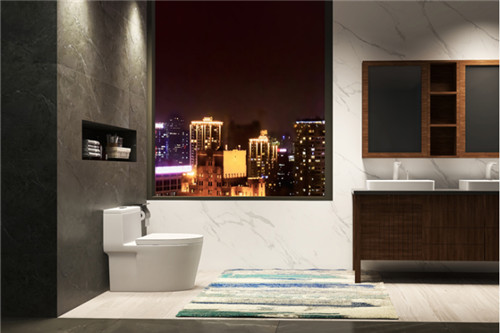
This means the scope of coordination will extend from internal manufacturing to external ecosystems, including chip suppliers, cloud platforms, and home decoration companies, placing higher requirements on system openness and integration capability.
In the bathroom customization track, product innovation is easy to imitate, but supply chain collaboration capability is difficult to replicate. Whoever can take the lead in breaking through the three-line manufacturing barriers of ceramics, metal fittings, and intelligence will be able to build a real moat in the high-end market.
Soonfor Software has focused on comprehensive digital solutions for the pan-home furnishing industry for more than 20 years.Its main products and services include ERP, MES, APS, SCM, CRM, management consulting, integrated digital intelligent manufacturing solutions, and digital workshop solutions. It has already helped enterprises such as Xinhaijialan and Maihua Bathroom make the leap from single-product delivery to scenario-based delivery, ensuring that every customized bathroom set fits perfectly and works intelligently without worry.
Back to List >>Call Soonfor
Sales: 137-1208-6729
After-sales: 400-1166-002

Back to Top
|
Free Consultation
|
Online Support
|
Submit Request |