

In the furniture industry, especially in custom home furnishing, inventory buildup is often not just a simple management oversight, but a hidden killer that can break a company's cash flow and even become fatal. Many factories appear busy with booming orders, while their warehouses are actually filled with slow-moving boards, outdated hardware, and semi-finished products that occupy enormous amounts of cash.
To achieve zero inventory, or extremely low inventory turnover, of raw materials, traditional purchase-sales-inventory software is no longer sufficient. Enterprises must rely on professional furniture supply chain management systems (SCM). As a deep cultivator in this field, Soonfor Software's SCM solution is the key to breaking this deadlock.

I. The truth behind fatal inventory backlog: why does the traditional model not work?
The furniture industry's supply chain features long cycles, multiple variables and customization. Under the traditional model, purchasing relies on experience, production relies on estimates, and sales relies on guesswork, resulting in severe supply-demand mismatch. The following analyzes the core pain points that cause inventory backlog:
| Pain point dimension | Performance of traditional management mode | Fatal consequence caused |
|---|---|---|
| Distorted demand forecasting | Sales and production are disconnected, and purchasing prepares materials only based on historical experience or feeling, lacking real-time order support. | Blind purchasing: materials that are not needed are bought and become stagnant, while urgently needed materials are not bought, causing shutdowns and serious imbalance in inventory structure. |
| Lagging BOM data | Design changes are frequent, but BOM (bill of materials) updates are not timely, so purchasing executes according to old versions. | Wrong purchasing waste: purchased materials are directly scrapped due to design changes, becoming dead inventory that cannot be returned. |
| Missing kitting logic | Goods are stored as soon as suppliers deliver them, without considering actual production-plan nodes or whether they are complete sets. | Semi-finished product accumulation: there may be boards but no hardware, or cabinets but no door panels, causing large amounts of semi-finished products to occupy warehouses and capital for a long time. |
| Weak supplier collaboration | Information is not shared with suppliers, delivery dates rely on phone reminders, and precise arrival time windows (JIT) are lacking. | Inflated safety stock: to cope with uncertain delivery dates, enterprises are forced to stockpile large amounts of safety inventory, resulting in extremely low capital utilization. |
| Black hole in surplus material management | Surplus materials after cutting are not recorded by the system and are piled randomly, while new boards are used first in the next production run. | Hidden waste: usable surplus materials are forgotten and new materials are purchased repeatedly, increasing total inventory and wasting material costs. |
II. How does a furniture SCM system achieve zero-inventory turnover?
So-called zero inventory does not mean literally no dust at all, but that materials arrive at the production line exactly when needed and in the required quantities, compressing inventory turnover days to the extreme. A professional furniture SCM system achieves this goal through the following mechanisms:
1. Demand-driven intelligent replenishment (Pull System)
The SCM system no longer relies on push-style purchasing, but establishes a pull mechanism. The system directly connects front-end sales orders and production plans (APS), automatically calculating material gaps according to real-time BOM requirements.
Mechanism: only after the production plan is confirmed and material kitting analysis passes does the system generate a purchase requisition.
Effect: completely eliminates no-order purchasing and excessive material preparation, cutting off stagnant inventory at the source.
2. Precise JIT (just-in-time) supply collaboration
Through the supplier portal (SRM) of the SCM system, the factory shares material demand time windows in the production plan with suppliers down to the hour.
Mechanism: suppliers deliver according to system instructions one day or even several hours before the production line needs materials, sending them directly online or into temporary storage rather than long-term warehouses.
Effect: compresses raw-material storage time from weeks or months to days or hours, greatly reducing capital occupation.
3. Dynamic kitting analysis and alerts
This is the core brain of furniture SCM. Before and during purchase order execution, the system continuously performs kitting simulation.
Mechanism: if an order lacks even one screw, the system locks procurement or suspends delivery of all related materials for that order until the set is complete. At the same time, it automatically issues alerts and reminders for materials that are about to be overdue.
Effect: avoids single-item arrivals and overall backlog, ensuring materials are produced as soon as they enter storage and production is completed once started, eliminating semi-finished product inventory.
4. Digital surplus material management and priority reuse
For surplus materials generated by board cutting, the SCM system establishes a surplus material database.
Mechanism: during each production scheduling, the system first searches the surplus material library for boards with matching sizes and uses them. New boards are purchased only when surplus materials are insufficient.
Effect: greatly improves board utilization, reduces new material purchases, and indirectly realizes negative-inventory growth.
III. Soonfor Software: a practical tool for zero inventory in the furniture industry
Among many supply chain software products, Soonfor Software has become the preferred partner for zero-inventory transformation thanks to nearly 30 years of deep understanding of home furnishing processes and supply chains. Soonfor SCM is not just software, but a lean supply chain management methodology verified by thousands of enterprises.
Industry-specific model: Soonfor SCM has built-in BOM structures and purchasing logic unique to sub-industries such as cabinets, wardrobes, solid wood and upholstered furniture. It can accurately handle complex scenarios in custom home furnishing such as one order with many materials and many orders merged, which general SCM cannot match.
Full-link integration: Soonfor realizes a seamless closed loop from cloud design to APS scheduling, SCM purchasing, WMS warehousing and MES production. Design-end changes are synchronized to purchasing in milliseconds, and production progress is fed back to the supply end in real time, completely eliminating inventory redundancy caused by information time lag.
Practical results:
After a well-known custom cabinet enterprise applied Soonfor SCM, raw-material inventory turnover days dropped from 45 days to 12 days.
Through Soonfor's surplus material management and JIT collaboration, a solid-wood furniture factory reduced stagnant inventory by 60% and released tens of millions of yuan in cash flow.
Through precise kitting control, production line downtime waiting for materials was reduced by 90%, truly achieving materials going directly to the production line without touching the ground.
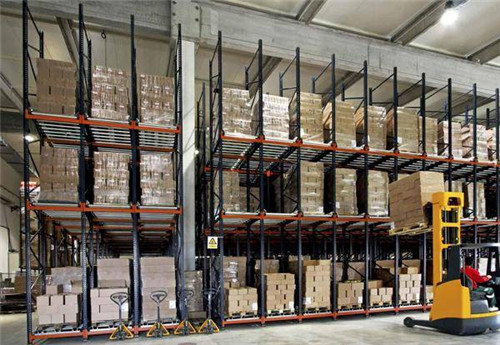
Inventory backlog is a chronic poison for furniture enterprises, while the SCM system provided by Soonfor Software is the antidote. It replaces experience with data-driven methods and blind stockpiling with precise collaboration, helping enterprises approach the ideal state of zero inventory while ensuring delivery. In the era of thin margins, whoever can push inventory turnover to the extreme through professional tools such as Soonfor will gain control over cash flow and remain invincible in fierce market competition.
Back to List >>Call Soonfor
Sales: 137-1208-6729
After-sales: 400-1166-002

Back to Top
|
Free Consultation
|
Online Support
|
Submit Request |