What functions does an MES system have? An MES manufacturing execution system is a production informatization management system for the workshop execution layer of manufacturing enterprises and is the core of a digital workshop. By digitally controlling the overall production process and leveraging automation and intelligent technologies, it realizes intelligent workshop manufacturing control, transparent production processes, CNC-based manufacturing equipment, and integrated production information. So what specific functions does it have? Introduction to MES System Functions:
1. Workshop Resource Management
Workshop resources are the foundation of workshop manufacturing and production, and also the basis for MES system operation. Workshop resource management mainly manages workshop personnel, equipment, tooling, materials, working hours, and other resources to ensure normal production, while providing historical records of resource usage and real-time status information.

2. Workshop Planning and Scheduling Management Production planning is both a key point and a difficult point in workshop production management. Improving schedulers' efficiency and the accuracy of production planning is an important means of optimizing production processes and improving production management. The workshop receives the master production plan and, based on current production conditions such as capacity, production preparation, and work-in-process tasks, production preparation conditions such as drawings, tooling, and materials, as well as project priority and planned completion time requirements, formulates reasonable production processing plans and supervises production progress and execution status. The advanced planning and scheduling tool (APS) combines the real-time load of workshop resources, current plan execution progress, and capacity balancing to generate optimized detailed scheduling plans. It fully considers the processing capacity of each piece of equipment and can be adjusted at any time according to actual on-site conditions. After automatic scheduling is completed, plan evaluation and manual adjustment can be carried out. In a production environment characterized by small batches, multiple varieties, and many processes, the advanced scheduling tool can quickly respond to the complexity of urgent inserted orders. 3. Production Task Management Production task management includes functions such as receiving and managing production tasks, displaying task progress, and task inquiry. It provides all project information, allows users to query specified projects, and displays the complete production cycle and completion status of projects. It also provides production progress displays, showing daily, weekly, and monthly tasks, distinguishing task stages by color, and enabling tracking of project tasks. 4. Quality Process Management Process inspection and product quality management in the manufacturing process can realize traceability of process inspection and product quality processes, and strictly control nonconforming products and rectification processes. Its functions include comprehensive recording of key elements in the production process and complete quality traceability, accurate statistics on product qualification and defect rates, and quantitative indicators for quality improvement. Based on product quality analysis results, preventive maintenance can be carried out for shipped products. 5. Material Tracking Management Barcode technology is used to manage and track logistics in the production process. During production, materials are tracked online through barcode scanning to monitor material circulation and ensure fast and efficient flow of materials through the workshop, while remaining available for inquiry at any time. 6. Production Process Management Production process management realizes closed-loop visual control of the production process to reduce waste such as waiting time, inventory, and overproduction. During production, various methods such as barcodes, touchscreens, and machine tool data collection are used to track planned production progress in real time. Production process management aims to control production, implement and execute production scheduling, and track the status of work and workpieces in the workshop. Processes that currently cannot be handled in-house can be outsourced. It realizes management functions such as process dispatching, outsourced processes, and complete-set coordination, and can display on-site workshop information and task progress information in real time through kanban boards.
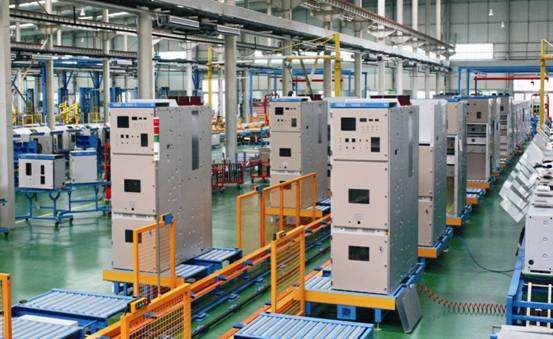
7. Production Monitoring Management Production monitoring supervises the production process from multiple dimensions such as production schedule progress and equipment operating conditions, and manages workshop alarm information including equipment failures, personnel absence, quality issues, and other causes. It helps discover, report, and handle problems in a timely manner, thereby ensuring that the production process proceeds smoothly and remains under control. It can also combine with distributed numerical control DNC systems and MDC systems for equipment networking and data collection. 8. Inventory Management Warehouse management focuses on all inventory materials within the workshop. Materials in the workshop include self-made parts, outsourced parts, purchased parts, cutting tools, tooling, and circulating raw materials. Its functions include using inventory management to retrieve stored materials, query current inventory and historical records, provide inventory counting and warehouse transfer functions, set alerts when raw materials, tools, and tooling are insufficient, and support warehouse in/out operations for parts and components, including borrowing, returning, repair reporting, and scrapping of tools and tooling. 9. System Statistical Analysis It can perform statistical queries on data generated during the production process and form reports after analysis, providing reference data and decision support for subsequent work. Production process data is abundant, and the system customizes different statistical query functions as needed, including product processing progress inquiry, workshop work-in-process inquiry, workshop and station task inquiry, product matching completeness inquiry, quality statistical analysis, workshop capacity utilization analysis for labor and equipment, and scrap rate and defective rate statistical analysis. MES Systemis the link that connects upper-level planning management systems and lower-level industrial control systems. It provides managers with plan execution, tracking, and the current status of all resources, including people, equipment, materials, and customer demand, so its functions are indeed very powerful.
Back to List >>