What Does Production Management Software Include? What Are Its Advantages?For manufacturing enterprises, production is the greatest driving force of the business, and production also needs upgraded management. Good production management can bring enterprises huge room for development and profit value. For this reason, using production management software to optimize production management processes and improve production management capability has become a necessary choice for manufacturing enterprises seeking industrial upgrading.
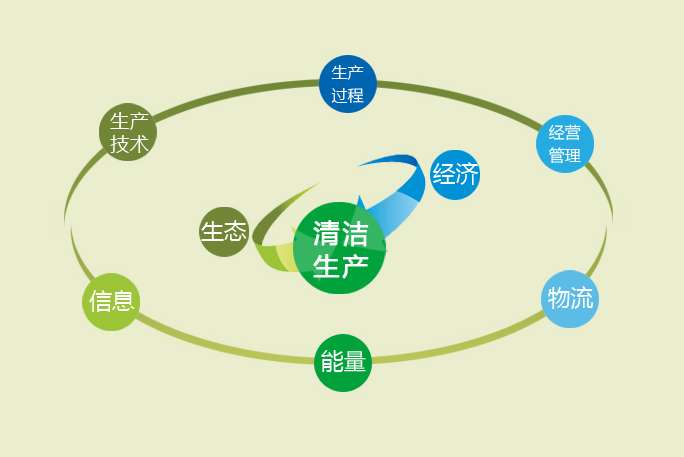
What Production Management Software Includes: 1. Basic Data Maintenance It includes functions for entering, copying, querying, modifying, and deleting material master files, bills of materials, process routes, and work center data. It is the main body of the manufacturing data management system. 2. Bill of Materials BOM Management It provides users with various types of bills of materials according to different requirements, such as single-level BOMs, multi-level BOMs, single-level reverse queries, and multi-level reverse queries. 3. Automatic Material Calculation for Production Orders Orders are automatically calculated according to the BOM to determine inventory quantities and purchasing quantities, which greatly facilitates enterprise management and prevents material waste. 4. Production Progress Management Through the ERP system, data such as the production progress of each process, qualification rates, production equipment status, and the number of production workers can be viewed intuitively. 5. Cost Accounting The ERP system can independently calculate the cost of each order. Material costs, labor costs, property costs, utility costs, and other expenses are all clear at a glance, providing data references for enterprise analysis and management.
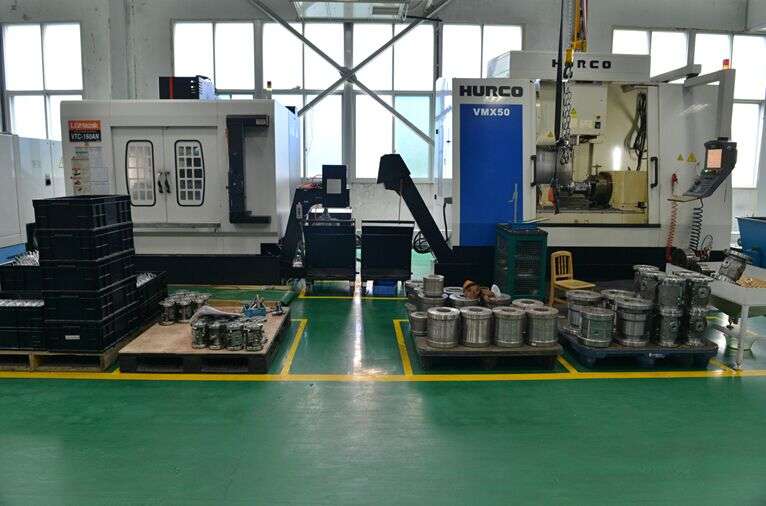
What Are the Advantages of Production Management Software:
1. Collaboration The system not only performs collaborative processing at the management process level, but more importantly coordinates sales, procurement, and production-related plans and actions in terms of quantity and time. For example, in terms of quantity, planned tasks coordinate the quantities of tasks in different links according to the composition ratios in the production BOM. In terms of time, plans are decomposed and coordinated along the timeline according to purchasing lead times, supply cycles, production cycles, and so on. 2. Automatic Plan Optimization Based on data such as production configuration, optimization targets, work-in-process plans, and inventory levels, the system can automatically formulate optimized production plans for rescheduling under conditions such as delivery dates, priority levels, and capacity constraints. It also automatically decomposes plans into different links and simultaneously calculates supply requirements, completing the automatic linked planning of "sales-production-procurement." 3. Early Warning It can automatically issue warnings for purchasing demand, insufficient supply, task delays, and similar situations. 4. Fault Tolerance By design, the system can automatically adapt to error correction through inventory checks and modifications to order planning data, avoiding a large number of modification operations. In practical use, this feature has proven to be necessary and effective. Because of this feature, the system is more usable than most ERP management software. 5. Ease of Operation Complex planning operations are simplified through graphical methods, and this interface has received high praise from members of the Operations Research Society of America. Other functional interfaces are also heavily optimized according to the thinking patterns and usage habits of domestic enterprise personnel, focusing on the integration of information and operations and on simplifying workshop management. With fewer operations, it can accomplish tasks that other software requires much more manpower and time to perform. At the same time, because most interfaces are highly integrated, the effective provision of information can better help personnel make decisions in less time. 6. Openness When the system's data and programs were designed, scalability was already taken into account. It uses the .Net platform and object association technology, which greatly simplifies the logic of data relationships. At the cost of occupying some additional storage space, it improves the system's functional scalability with a small amount of core data structures and logic, while also making it convenient to interface with other software systems.
With production planning as the main line, production management software carries out unified planning and control of various manufacturing resources within the enterprise, realizing effective integration of enterprise production resources, including the six major functional modules of production, materials, human resources, sales, finance, and operations, thereby helping manufacturing enterprises solve management bottlenecks.
Back to List >>