

X
会员中心
登录 注册
X
姓 名*
身份证号*
手机号码:
QQ号码:
X
姓  名:
证书编号:
身份证号:
发证日期:
此证书持有人通过数夫家具软件应用技能考核。具备熟练使用以下数夫家具软件模块进行业务处理操作的能力。
软件版本:
应用模块:
本证书表明此证者通过资格证评审组严格考核,已达到相应技能水平。
总经理:
Home News Center Industry Knowledge
Industry Knowledge

How Can Custom Furniture Enterprises Achieve Rational Material Utilization?

Published on: 2024-02-21

How can custom furniture enterprises achieve rational material utilization? In today's market environment, where environmental awareness is growing stronger, custom furniture enterprises face the challenge of how to achieve rational material use, reduce waste, and improve production efficiency. Rational use of materials can not only lower costs and improve enterprise competitiveness, but also significantly enhance an enterprise's sustainable development capability and market image. So what exactly should be done to achieve rational material utilization?


How Can Custom Furniture Enterprises Achieve Rational Material Utilization


To save board materials, we must pay attention to the following 7. points:

1. Start with the Specifications of Components

The specifications of wood-based panels are basically imperial sizes, such as 4. feet x 8. feet and 4. feet x 6. feet, that is, 122mm x 244mm and 122mm x 183mm. Panel furniture uses wood-based panels as raw materials, so if we determine component specifications as sizes such as 392, 95, 595, and 195 and make them fit the specifications of the raw materials, we can improve board utilization and reduce waste.

But it should be noted that if a certain furniture style has gained market recognition, and some of its component specifications waste more material because of styling, use, and other needs, for example, some office desk tops with a size of 14mm x 7mm, where one 122mm x 244nnn board can produce only one top with relatively large waste, then we should not be dogmatic. We should make the dimensions fit such specifications while adjusting them as much as possible.

2. Start with the Thickness of Components

There are many habits in furniture production, and these habits have both good and bad sides. For example, furniture in northern China often has a heavy and bulky style, and thick boards and large boards are often used out of habit. In some cases, this is unfavorable for material utilization.

For example, for drawer side panels, we often use boards that are 16mm or 18mm thick; however, many manufacturers in southern China already commonly use 12mm-thick boards in high-end furniture. Practice has proved that this size has stood the test in both styling and strength.

By extension, some small shelves, partitions, and even side panels and top panels, such as those of a bedside cabinet, can all use 12mm thin boards.

3. Start with the Structure of Components

Many components, such as side panels, partitions, and top panels, need relatively thick boards for styling and functional requirements. At such times, thin boards cannot be used just to save material, but we can use a wrapped inlay structure, commonly known as a hollow structure, that is, first making a wooden frame from timber and then covering it with plywood. This practice saves material and also reduces the weight of the component. However, some load-bearing components, such as office desk tops, are not suitable for this structure.

There is also another kind of hollow board whose core material uses higher-strength honeycomb paper, making the cost lower than hollow structures that use wood as the core material. In addition, structural processes such as edge inlay and false edges can also reduce material usage.

4. Start with the Structure of the Furniture

Furniture must have a stable structure, what is commonly called sturdiness. Some furniture can still meet the requirement of sturdiness after certain components are omitted.

When we examine many commonly used products from the past, we can find many components that can be omitted. In addition, we should break through conventional restrictions and design more products that are novel, fresh, and simple in structural styling.

5. Make Full Use of Remaining Raw Materials

With the mass production of furniture, there will be many leftover raw materials that cannot be fully utilized. At this time, we should design some products suitable for the sizes of these raw materials and produce them regularly for the market, which is also an important way to save raw materials.

6. Start with the Quality of Raw Materials

In production, we should try to use qualified boards as much as possible, but sometimes for various reasons, such as purchasing boards with less-than-ideal strength or uneven thickness, returning them is no longer possible. In such cases, they can be used for internal shelves, movable shelves, drawer back panels, and other places where strength and thickness requirements are not high. However, attention must be paid to making sure the appearance of the material is acceptable.

7. Make Full Use of Outdated Raw Materials

Some old raw materials with outdated colors and patterns should not be left piled up in the warehouse for a long time. They can be fully used in concealed furniture positions, such as bottom panels and partitions inside cabinets.


How Can Custom Furniture Enterprises Achieve Rational Material Utilization


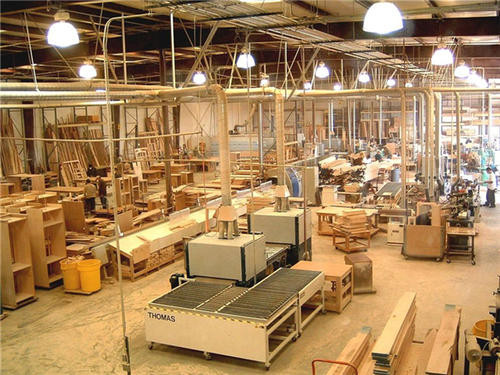
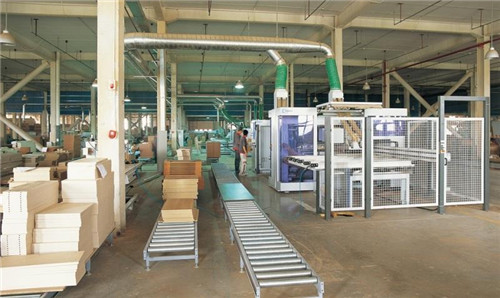
As a furniture manufacturing enterprise, production practice shows that saving board materials is a basic and important aspect of panel furniture production, and it is just as important as improving production efficiency, expanding production scale, and increasing sales efforts. Soonfor Software has focused for 27 years on integrated digital solutions for the broader home furnishing industry. Its main products and services include management software such as ERP, MES, APS, SCM, and CRM, as well as management consulting, integrated digital intelligent manufacturing solutions, and digital workshop solutions.
Back to List >>
Copyright ©2020 广东数夫软件有限公司 All Rights Reserved 版权所有 粤ICP备07004079号
Online Service| Sitemap | Legal Notice
Online Consultation
Submit Request
Contact Us
Hello, we are always here to help you

Call Soonfor

Sales: 137-1208-6729

After-sales: 400-1166-002

WeChat Consultation
Scan with your phone to add WeChat
Official Account
Scan to follow and leave a message
Back to Top
Free Consultation
Online Support
Submit Request